Part of our Custom Skylight Design Service service
Rooflights in Listed Buildings: Rules & Conservation Rooflights
Why listed buildings need listed building consent, and how conservation rooflights fit sensitively into historic roofs.
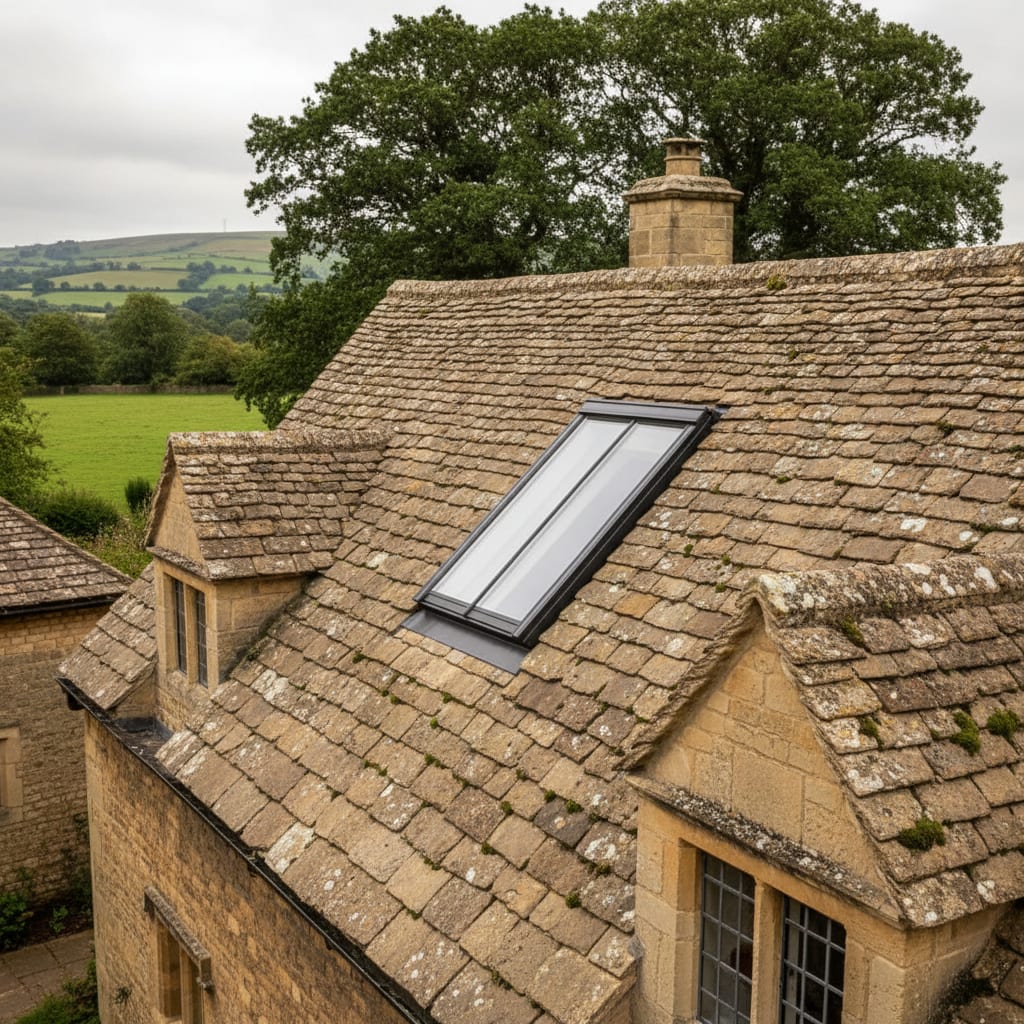
If your home is a listed building, adding or replacing a rooflight almost always requires listed building consent — a separate approval from planning permission. Cutting a new opening into a historic roof is treated carefully, and a sympathetic conservation rooflight is usually expected. Always speak to your local planning authority’s conservation team before any work.
Listed buildings carry the highest level of protection because they are of special architectural or historic interest. That protection extends to the whole building, inside and out, which is why roof alterations need particular thought. None of this rules out a rooflight — it simply means doing it the right way.
It helps to understand the grading system, because it shapes how much latitude there is. Buildings are listed at Grade I (exceptional interest), Grade II* (particularly important, more than special interest) and Grade II (special interest), with the great majority of listed homes in the Grade II category. The grade does not change the legal requirement for consent — it is needed regardless — but it does tend to influence how cautiously a proposal is judged. A discreet rooflight on the rear of a Grade II house is a more familiar request than the same work on a Grade I building, where the bar is higher and the historic roof structure may itself be part of what is protected. The listing also covers the whole property and can extend to curtilage structures, so an outbuilding or coach house within the grounds may carry protection too.
Listed building consent: the key difference
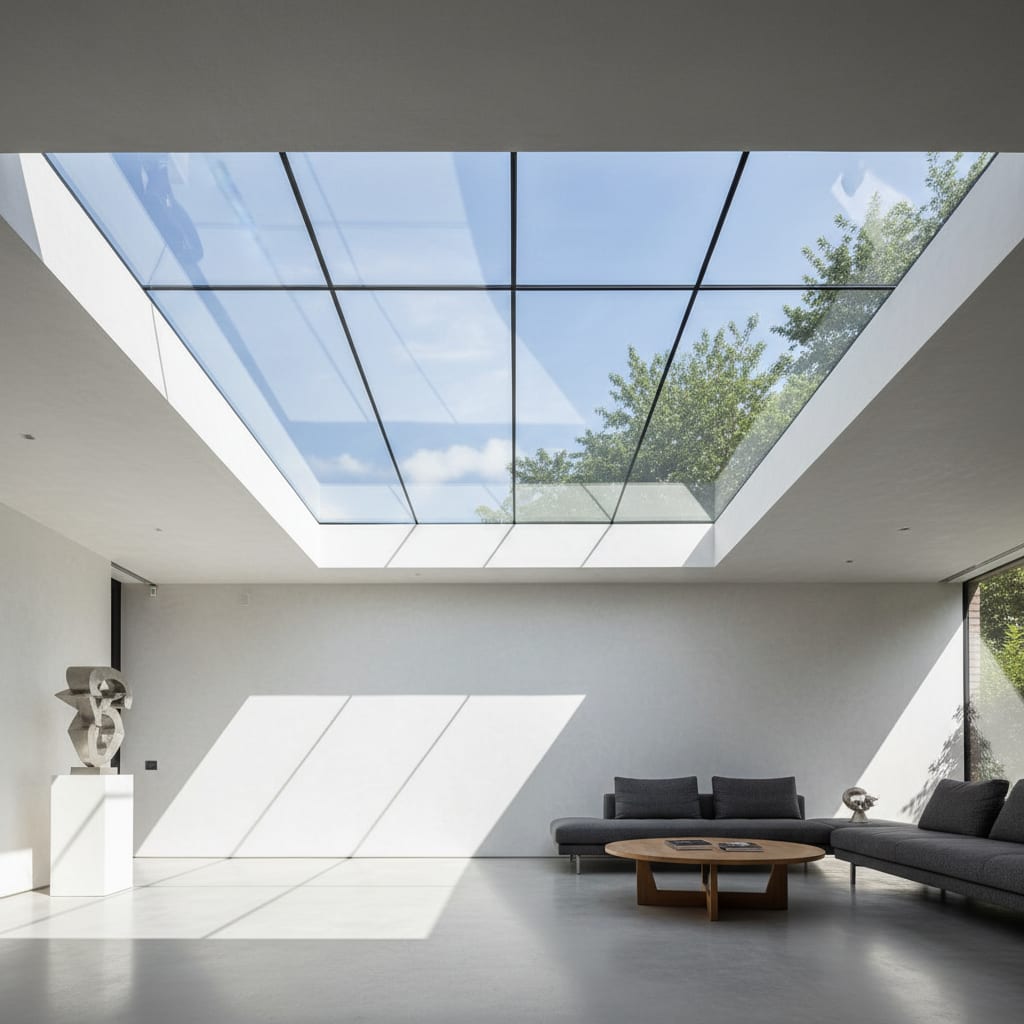
For most homes, the question is planning permission. For a listed building, the bigger question is listed building consent. This is required for works that affect the special character of the building, which can include forming a new rooflight opening, altering historic roof structure, or changing the external appearance of the roof. Carrying out such works without consent is a serious matter, so consent should always be obtained first.
Consent and planning permission are separate. A job may need one, the other, or both. Your local planning authority’s conservation officer is the person to talk to early.
It is worth being clear about the seriousness of getting this right. Carrying out works to a listed building without the necessary consent is a criminal offence, not merely a planning breach that can be tidied up later. That is why the order of events matters so much: design the rooflight, agree the approach with the conservation officer, obtain consent in writing, and only then start work. A reputable installer will not cut into a listed roof on the assumption that consent will follow. Where a property is also in a conservation area — which listed buildings very often are — both regimes apply, though the listed building consent is usually the dominant consideration for roof work.
Why conservation rooflights suit listed roofs
Where consent is granted, the rooflight is almost always expected to be sympathetic to the building’s age and character. A conservation rooflight — flush-fitting, low-profile, often with a slim central glazing bar that mirrors traditional cast-iron designs — is the standard answer. It sits close to the slates or tiles, keeps the roofline intact, and respects the historic appearance. Our conservation rooflight installation page explains the product in detail.
Protecting the historic fabric
On a listed roof, how the work is done matters as much as what is fitted. Good practice includes:
- Minimal intervention. Forming the opening with as little disturbance to historic structure as possible.
- Reversibility where feasible. Conservation favours work that could, in principle, be undone without lasting harm.
- Matching materials. Flashings, finishes and surrounding slates or tiles chosen to suit the existing roof.
- Careful structural support. Any cut rafters properly trimmed and supported so the historic roof remains sound.
Choosing the right rooflight for a historic roof
On a listed roof the choice of unit can make or break a consent. A genuine conservation rooflight is typically a low-profile metal-framed unit, finished in black or a dark colour, with a slim central glazing bar that divides the glass into a tall vertical proportion — echoing the hand-made cast-iron rooflights once installed in service and attic spaces. It is designed to be recessed into the roof so the glass sits close to the plane of the slates, with the surrounding lead or flashing kept neat and minimal. Some conservation officers will ask for a particular proportion, a specific finish, or a maximum size, and for the most sensitive cases a bespoke or single-glazed-appearance unit may be preferred. The point of all this detail is the same: the rooflight should look as though it could always have been there. Our conservation rooflight installation page covers the product options.
Position and visibility
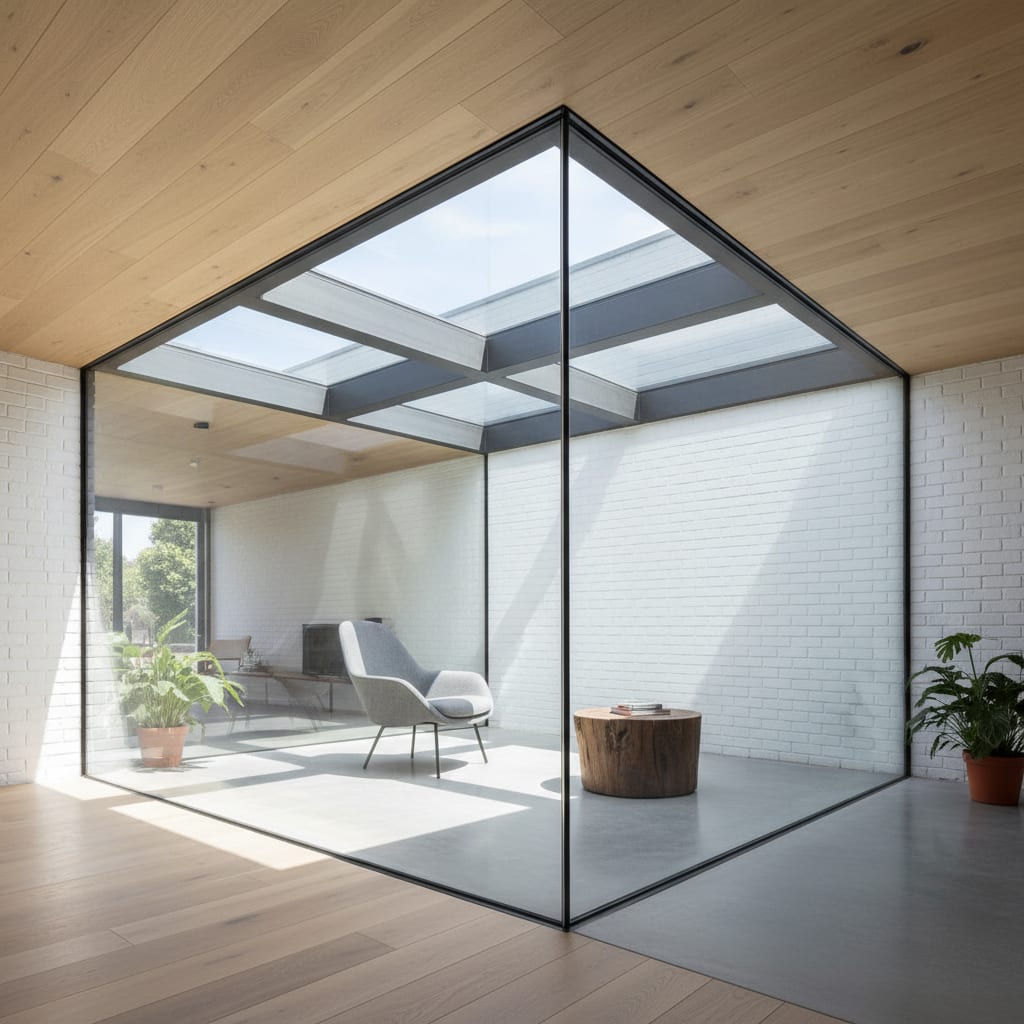
As with conservation areas, rooflights on the less visible rear slope of a listed roof are generally more acceptable than those on a prominent, publicly visible elevation. The conservation officer will consider how the rooflight affects the building’s appearance and setting, including views from neighbouring streets and open ground, not just the immediate frontage.
Building regulations still apply
Listed building consent does not replace building regulations. Your rooflight will still need to meet Part L energy standards and Part K safety glazing, and the structural work must be sound. In a loft conversion, escape and egress rules also apply — see our loft conversion building regs guide. The two systems run in parallel, and sometimes the energy requirements are applied with sensitivity to the historic fabric: where meeting a modern U-value in full would harm the special interest of the building, building control can take a proportionate view. That balance between conservation and energy performance is another point to confirm early with both the conservation officer and building control.
A sensible approach for a listed building
- Talk to the conservation officer first. Early, friendly engagement is the single best step.
- Propose a conservation rooflight. A flush, low-profile, sympathetic unit gives the best chance of consent.
- Favour discreet positions. Rear and less visible slopes are usually preferred.
- Get consent before starting. Never begin works to a listed building without the necessary consent in place.
How Aspect Skylights helps
We are specialists in sympathetic rooflight installations and regularly fit conservation rooflights on period and listed properties across Cheltenham and Gloucestershire, with care for the historic fabric. We install to the required standards and can guide you on what consent is likely needed, but we are not a planning, conservation or building control authority and do not claim to be approved or registered as one. Your local authority’s conservation team has the final say. Explore our services or get a quote after a free survey.
From quote to daylight, with no surprises
Fixed quote
A clear, fixed written price — online or by phone.
Survey
A specialist confirms the right glazing spec. Flexible times.
Install
Clean, weather-tight fitting that protects your property.
Guarantee
We tidy up and back the work with a written guarantee.
Frequently asked questions
Can I add a rooflight to a listed building?
Often yes, but it almost always needs listed building consent, and a sympathetic conservation rooflight is usually expected. Speak to your local planning authority’s conservation officer before any work begins.
What is listed building consent?
Listed building consent is a separate approval from planning permission, required for works that affect the special character of a listed building. This can include forming a new rooflight opening or altering historic roof structure. It should always be obtained before starting.
Why are conservation rooflights used on listed roofs?
Because they are flush-fitting and low-profile, often with a slim central bar that echoes traditional designs. They sit close to the slates or tiles and keep the historic roofline intact, which is what conservation officers usually expect.
Are rear rooflights preferred on listed buildings?
Generally yes. Rooflights on the less visible rear slope are usually more acceptable than those on a prominent, publicly visible elevation, but the conservation officer will consider each case.
Do building regulations apply to listed building rooflights?
Yes. Listed building consent does not replace building regulations. Part L energy standards, Part K safety glazing and sound structure all still apply, though energy rules may be applied sensitively to historic fabric. Confirm with building control.
Helpful reading on this
Costs, comparisons and answers to the questions we’re asked most.
Other skylight services
Ready to bring the daylight in?
Tell us about your project and we’ll send a clear, fixed written quote — no pressure, no surprises.
- Fixed written price before any work starts
- No pressure, no obligation, no sales calls
- Flexible survey times that suit you
- A reply within one working day