Part of our Roof Lantern Installation service
Roof Lantern vs Flat Rooflight: Which Is Best in Cheltenham?
A balanced look at two of the most popular ways to light a flat-roof extension — and how to choose the right one for your room.

If you are lighting a flat-roof extension, the choice usually comes down to a raised roof lantern or a low-profile flat rooflight. Both flood a room with daylight; they simply do it with a different look and feel. A lantern makes a statement and adds a sense of height, while a flat rooflight gives a clean, modern, almost frameless finish. Neither is “better” in the abstract — the right answer depends on your roof, your room and the look you are after.
This guide sets out the genuine differences so you can decide with confidence. Both options sit on the same flat-roof structure and both can transform a kitchen or living space, so the decision is less about performance and more about character, proportion and budget.
The quick answer
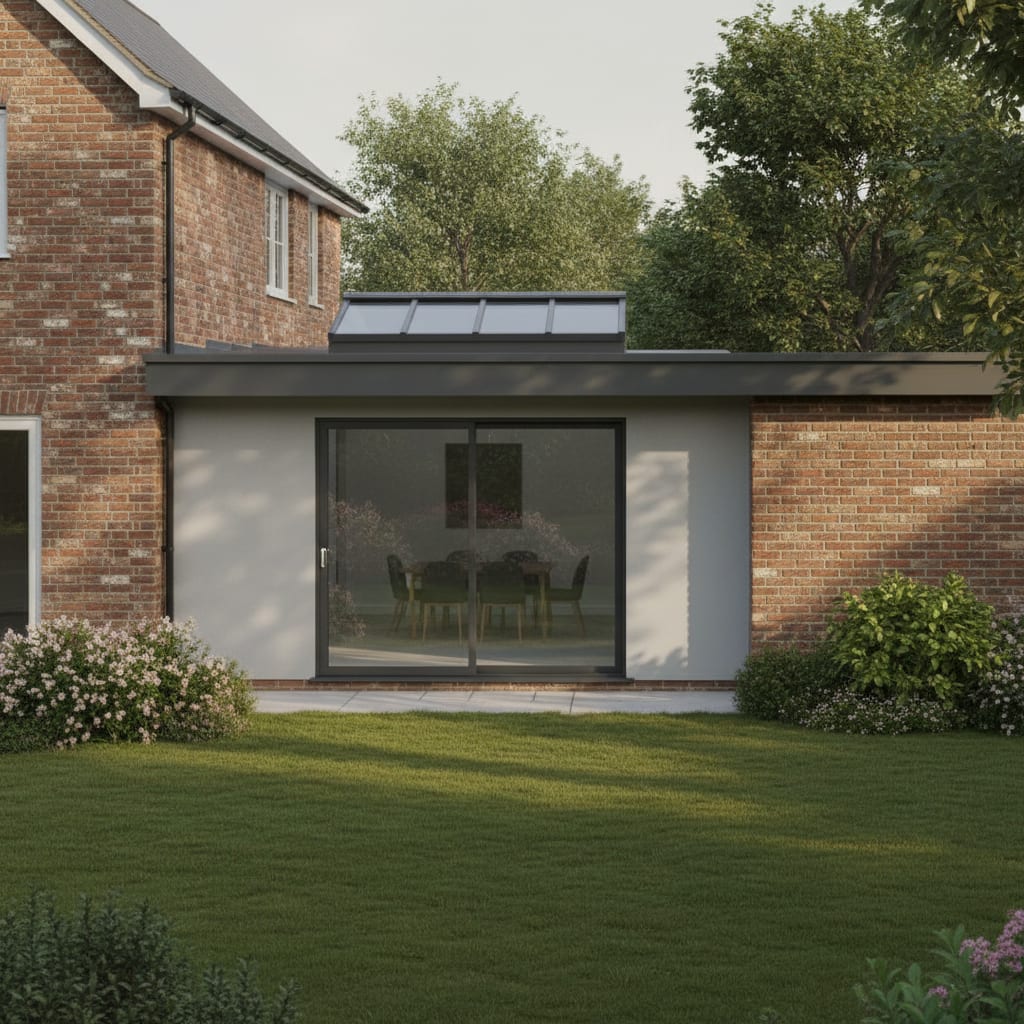
As a rule of thumb, choose a roof lantern when you want a feature with presence and a sense of volume overhead, and a flat rooflight when you want understated, contemporary light that lets the room itself do the talking. Larger, open-plan extensions often suit a lantern; smaller or minimalist spaces often suit flat glass.
How they compare
Roof lantern
- Pros: a striking architectural feature; the raised, pitched shape adds a feeling of height; sheds rain and debris well; classic and contemporary styles available; works beautifully over a dining table or island.
- Cons: the framework creates more sightlines than a single flat pane; it stands proud of the roof, so it is more visible from outside; typically costs more than a comparable flat rooflight.
Flat rooflight
- Pros: a clean, minimal, near-frameless look; sits low and discreet on the roof; excellent for modern interiors; usually more economical for a given size; large single panes give uninterrupted sky views.
- Cons: the flat or very low pitch means it relies on good drainage detailing; less of a “wow” centrepiece than a lantern; very large single panes are heavy and need careful handling.
Light and feel
Both let in generous daylight. A lantern’s pitched panes catch light from several angles through the day, which many people find lively and dynamic. A flat rooflight gives a calmer, more even wash of light and an uninterrupted view straight up. If you want the room to feel taller and more dramatic, the lantern wins; if you want sleek and quiet, the flat pane does.
Cost and practicality
For a like-for-like size, a flat rooflight is often the more economical choice, while a lantern carries a modest premium for its structure and framework. Both need a properly formed kerb or upstand on the flat roof to shed water and stay watertight. The covering on your flat roof — felt, EPDM, GRP or single-ply — affects how we detail the weatherproofing in either case. We cover indicative figures on our cost pages, and the only accurate number is a fixed written quote after a survey.
Which should you choose?

Choose a roof lantern if you want a centrepiece, you have the ceiling height to carry it, and a sense of volume matters to you. Our roof lantern installation page goes into the detail. Choose a flat rooflight if you prefer a contemporary, low-key finish, you want maximum glass with minimum frame, or budget is a key factor — see our flat roof skylight installation page. Many open-plan extensions actually combine both: a lantern over the dining zone and flat rooflights over the working areas.
How the choice plays out on a Cheltenham home
Around Cheltenham and the wider Cotswolds, the right answer often turns on the kind of property you are extending. On the contemporary rendered extensions you see across newer developments in Up Hatherley, Benhall and Leckhampton, a flat rooflight reads beautifully — its low, near-frameless profile keeps the clean modern lines intact and lets the architecture speak. On a more traditional Cotswold-stone cottage in a village like Prestbury, Bishop’s Cleeve or out towards Winchcombe, a roof lantern over a rear kitchen extension adds a sense of occasion that complements period proportions, particularly where the room has the ceiling height to carry it. The grander Regency and Victorian homes around Montpellier, Lansdown and Pittville often have generously tall rear rooms, which means a lantern’s raised volume feels at home rather than overbearing.
Conservation areas are a genuine consideration locally. Large parts of central Cheltenham fall within designated conservation areas, and there are tight controls in the Cotswolds Area of Outstanding Natural Beauty. Because a flat rooflight sits low and is barely visible from the street or from neighbouring higher ground, it tends to be the more sympathetic option where visibility is a concern — a useful point if your extension roof can be overlooked. A lantern stands proud of the roof and is more noticeable, so on a sensitive or overlooked plot it is worth thinking about sightlines from the outset. We are happy to advise on what tends to sit comfortably in these settings, though any formal planning or conservation guidance should always come from your local authority.
A simple way to decide
If you are still torn, run through these questions. Do you want the ceiling to be a feature, or do you want the room itself — the worktops, the table, the view out — to take centre stage? A lantern draws the eye up; flat glass keeps attention at eye level. How much ceiling height do you have? A lantern needs headroom to look generous rather than cramped, whereas flat glass works at almost any ceiling height. Is the extension roof overlooked from above or from the street? If so, the discreet flat option may suit. And finally, where does your budget sit? For a like-for-like size the flat rooflight is usually the more economical, leaving headroom for better glazing or a larger pane.
It is also worth thinking about where the light needs to land. A lantern over a kitchen island or dining table throws daylight from several angles and makes that zone the heart of the room. A long flat rooflight, or a run of them, washes even light across a wider floor area — ideal for a galley kitchen or an open-plan space where you do not want a single bright focal point. For the cost side of each route, our roof lantern cost guide and our flat roof skylight installation page give indicative 2026 figures, and our broader services overview shows the full range.
Which suits a Cheltenham home?
There is no single answer, but a fair generalisation holds: contemporary Gloucestershire extensions and minimalist renovations tend to favour the flat rooflight, while period and characterful Cotswold properties — and homes where the rear extension is the showpiece — often lean towards the lantern. Plenty of local projects sensibly combine the two, and many of our Cheltenham clients end up with a lantern over the dining zone and discreet flat glass over the working areas, getting impact and even light in one scheme.
Still weighing it up? We are happy to talk it through on site and show you how each would look on your roof. Get a quote and we will give you honest advice and a fixed written price after a free survey, backed by our written guarantee on our workmanship.
From quote to daylight, with no surprises
Fixed quote
A clear, fixed written price — online or by phone.
Survey
A specialist confirms the right glazing spec. Flexible times.
Install
Clean, weather-tight fitting that protects your property.
Guarantee
We tidy up and back the work with a written guarantee.
Frequently asked questions
Is a roof lantern better than a flat rooflight?
Neither is simply better. A roof lantern is a raised architectural feature that adds height and presence, while a flat rooflight gives a clean, modern, near-frameless look. The right choice depends on your room, roof and the style you prefer.
Which lets in more light, a lantern or a flat rooflight?
Both let in generous daylight. A lantern catches light from several angles through its pitched panes, giving a lively feel, while a flat rooflight gives an even wash of light and an uninterrupted view of the sky.
Is a flat rooflight cheaper than a roof lantern?
For a like-for-like size, a flat rooflight is often the more economical option, while a lantern carries a modest premium for its framework and structure. We confirm exact figures in a fixed written quote after a survey.
Do both need a kerb on the flat roof?
Yes. Both a roof lantern and a flat rooflight sit on a raised kerb or upstand to shed water and stay watertight. If your builder has formed one accurately it keeps costs down; if not, we can supply and fit one.
Can I have both on one extension?
Yes, and many open-plan extensions do. A common approach is a lantern over the dining or seating zone for impact, with flat rooflights over working areas for even light. We can plan the layout at survey.
Helpful reading on this
Costs, comparisons and answers to the questions we’re asked most.
Other skylight services
Ready to bring the daylight in?
Tell us about your project and we’ll send a clear, fixed written quote — no pressure, no surprises.
- Fixed written price before any work starts
- No pressure, no obligation, no sales calls
- Flexible survey times that suit you
- A reply within one working day