Commercial Skylight Installation in Cheltenham & Gloucestershire
Daylight engineered for workplaces across Cheltenham and Gloucestershire — offices, retail, warehouses and hospitality, installed and fully replaced to a watertight standard, backed by a fixed written quote.
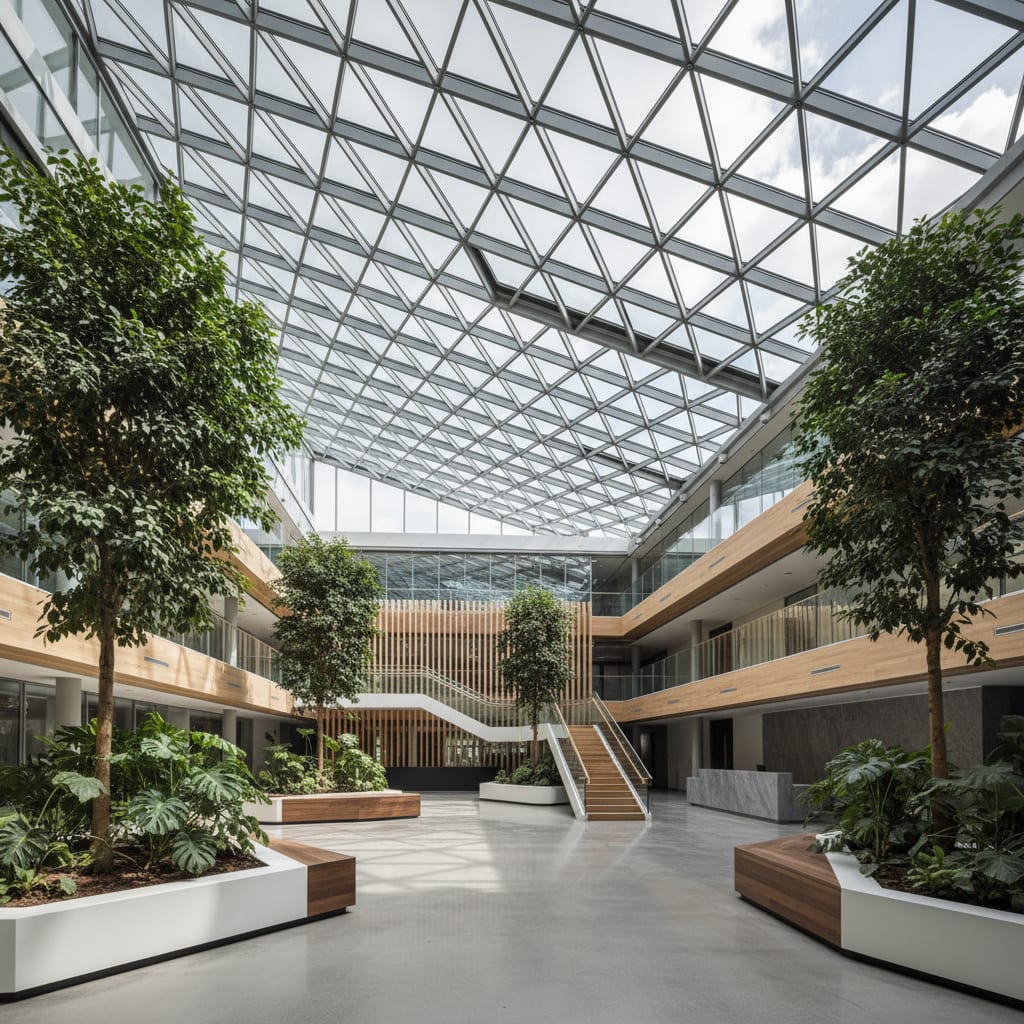
A commercial building lives or dies on its daylight. Bring natural light into an office, a shop, a warehouse or a restaurant and you change how the space feels to work in, to shop in and to spend time in. As Cheltenham’s dedicated skylight and rooflight specialists, we install and fully replace commercial rooflights across the town and right across Gloucestershire — from the business parks off the A40 to the independent shopfronts of the Suffolks, and from Cotswold industrial units to hospitality venues in the heart of the Promenade.
This is specialist work. A commercial rooflight is a bigger, more demanding job than a domestic skylight: larger spans, flatter roofs, single-ply and built-up roofing systems, fall-protection requirements, and a building that often needs to stay open while you work. We approach every commercial installation as a calm, methodical, properly-detailed job — because on a flat commercial roof, the detailing is everything.
What commercial skylight installation actually involves

Commercial skylight installation means designing, supplying and fitting glazed openings into the roof of a non-domestic building — or fully replacing tired, leaking or failed units that have reached the end of their life. The goal is the same as it is in a home: bring daylight down into the space below. But the context is different. Commercial roofs are usually flat or very low-pitch, often large in area, and frequently covered in single-ply membrane, built-up felt, EPDM or a metal deck. The rooflights that suit them are engineered accordingly.
We handle both halves of the job. New installation means forming fresh openings in an existing or new-build roof — cutting the deck, forming or fitting kerbs, and weatherproofing the unit into the roof covering. Full replacement means stripping out aged dome lights, failed glazing or yellowed polycarbonate and fitting modern, efficient units in their place, re-detailing the weatherproofing as we go. We do not patch or repair commercial rooflights; we install them new and we replace them in full, which is the only way to stand behind the result with our written guarantee on our workmanship.
Why a specialist matters on a commercial roof

The single biggest reason businesses across Gloucestershire come to a specialist is risk. A commercial rooflight that leaks is not a minor inconvenience — it can stop trading, damage stock, soak a ceiling above a shop floor or short out electrics in an office. The way to avoid that is correct detailing, and correct detailing comes from doing this work day in, day out.
On a flat commercial roof the glass is the easy part. The upstand or kerb height, the flashing laps, the membrane terminations and the falls are where a unit stays dry for decades or starts to fail within a season. We build kerbs to the right height for the covering, lap and weld or bond the membrane correctly, and make sure water clears the unit rather than pooling around it. We work to the realities of a commercial roof — plant, parapets, existing penetrations, gutters and outlets — rather than treating it like an oversized house.
There is a safety dimension too. Working at height on a commercial roof demands proper access and edge protection, and large glazed panels need careful, planned handling and lifting. A specialist plans the lift, the access and the sequence so the job is safe and the building is disrupted as little as possible. For larger schemes we coordinate around your trading hours, so a shop, office or restaurant keeps running while we work overhead.
Types of commercial rooflight

There is no single “commercial skylight”. The right unit depends on the building, the roof and what the space is for. These are the options we install and replace most often across Cheltenham and Gloucestershire.
Flat glass rooflights
Sleek, contemporary flat glass units suit offices, showrooms, retail interiors and hospitality spaces where appearance matters as much as daylight. A large single pane gives a clean, modern look and an uninterrupted view of the sky, lifting a reception, a meeting room or a restaurant ceiling. They sit low on the roof and read as architecture rather than utility.
Dome and pyramid rooflights
The traditional workhorse of the commercial roof. Polycarbonate or acrylic domes are economical, tough and naturally self-draining thanks to their curved profile, which is why they have lit warehouses, factories, schools and workshops for decades. They diffuse light softly and cut glare — ideal over a shop floor or a production area. Modern grades resist yellowing far better than older units, which is one of the most common reasons businesses ask us to replace ageing domes. Our dome rooflight installation page goes into the detail, and if you are weighing materials, our guides on polycarbonate skylight cost and whether polycarbonate skylights yellow are worth a read.
Continuous rooflights and barrel vaults
For larger industrial and warehouse roofs, continuous rooflights — long runs of glazing along the roof — and barrel-vault systems flood big floor areas with even daylight. They are a highly effective way to cut reliance on artificial lighting across a large footprint, which matters both for the working environment and for running costs.
Walk-on and structural glazing
Where a roof terrace, balcony or accessible deck sits above an occupied space, walk-on glass brings light to the floor below while taking foot traffic above. This comes up on mixed-use buildings and hospitality venues across Cheltenham, where roof terraces are increasingly part of the offer.
Smoke ventilation and access rooflights
Some commercial rooflights do more than light a space. Automatic opening vents (AOVs) form part of a building’s smoke-ventilation strategy, opening on a signal to clear smoke from a stairwell or atrium, while access rooflights provide safe roof access. These are specialist units with specific requirements, and we install them as part of a wider scheme where the building demands them.
Materials and frames

Commercial rooflight frames are almost always aluminium, and for good reason. Aluminium is strong, light for its strength, will not rot, warp or rust, and powder-coats in any colour to match a building’s scheme. Its strength allows slim sightlines and large spans, which is exactly what a big commercial opening needs. Thermally broken aluminium frames — with an insulating barrier through the frame — control heat loss and reduce condensation, and they are the standard we specify for occupied commercial spaces.
For glazing, the choice is between glass and polycarbonate. Glass gives clarity, a premium finish and long-term resistance to discolouration — the right answer for offices, retail and hospitality. Polycarbonate is lighter, tougher against impact and more economical, which keeps it the sensible choice for warehouses, industrial units and large self-draining domes. We match the material to the building rather than applying one answer everywhere.
Glazing and performance

In a commercial building, glazing performance is not a luxury — it shows up directly in comfort and running costs. Three things matter most.
Insulation (U-value). The lower the U-value, the less heat escapes through the glazing. On a large area of commercial rooflighting that adds up quickly, both in heating bills and in how steady the internal temperature stays. Double-glazed units with a low-emissivity coating are the baseline; for large glazed areas and year-round occupied spaces, triple-glazed rooflights are worth considering for the extra insulation and the useful reduction in rain noise overhead.
Solar control. Daylight is the goal; overheating is the enemy. A south-facing glazed roof over an office or a restaurant can turn a room into a greenhouse without the right glass. Solar-control coatings let daylight in while reflecting much of the heat, keeping the space usable through summer and easing the load on air conditioning. For more on getting the balance right, see our energy-efficient skylight installation page.
Safety glazing. Overhead glazing in a commercial setting must be specified to break safely. We fit laminated and toughened units appropriate to the position, so that in the rare event of breakage the glass holds together rather than falling.
Our installation process

A commercial job runs on planning. Here is how we approach it from first contact to handover.
- Survey and brief. We visit the building, get on the roof where safe to do so, and assess the structure, the covering, the falls and the access. We talk through what the space is for and what you want the daylight to do.
- Design and specification. We propose the right units, glazing and layout, and confirm the weatherproofing approach for your particular roof covering — single-ply, built-up felt, EPDM, GRP or metal deck.
- Fixed written quote. You receive a clear, itemised, fixed written price after the survey, so there are no surprises mid-project.
- Programme and access. We agree a programme that works around your trading or operating hours, arrange safe access and edge protection, and sequence the work to minimise disruption.
- Installation. We form or prepare openings, fit or build kerbs, install the units and detail the weatherproofing into the covering — methodically, and weather-tight at every stage.
- Handover. We leave the roof clean, demonstrate any opening or controlled units, and back the workmanship with our written guarantee.
Building regulations and planning

Commercial rooflighting sits firmly within the scope of the Building Regulations. Part L governs energy efficiency and the U-values your glazing must achieve; on commercial work the area of glazing and its performance feed into the building’s overall energy calculation, so it pays to specify well from the start. Part K and the safety-glazing requirements govern overhead glass, which we address through laminated and toughened specification as standard. Where rooflights form part of a fire strategy — smoke ventilation, for instance — there are further specific requirements we design to.
On planning, much commercial rooflight work to an existing building can proceed without full planning permission, but commercial properties do not enjoy the same broad permitted-development rights as houses, so the position needs checking case by case. It matters even more in Gloucestershire because of where we work. Cheltenham has numerous conservation areas — Montpellier, Lansdown, the Park, the central commercial core — and the wider county is dense with Cotswold conservation areas and listed buildings, from Cirencester’s historic core to the stone-built centres of Tewkesbury, Stroud and Winchcombe. A shopfront or commercial building in one of these settings, or one that is listed, faces real scrutiny on anything visible from the street or a public vantage point. We always check your property’s conservation and listing status before we begin, and we keep visible alterations sympathetic where that is the requirement. Our role is to make the daylight work without falling foul of the rules.
Indicative cost
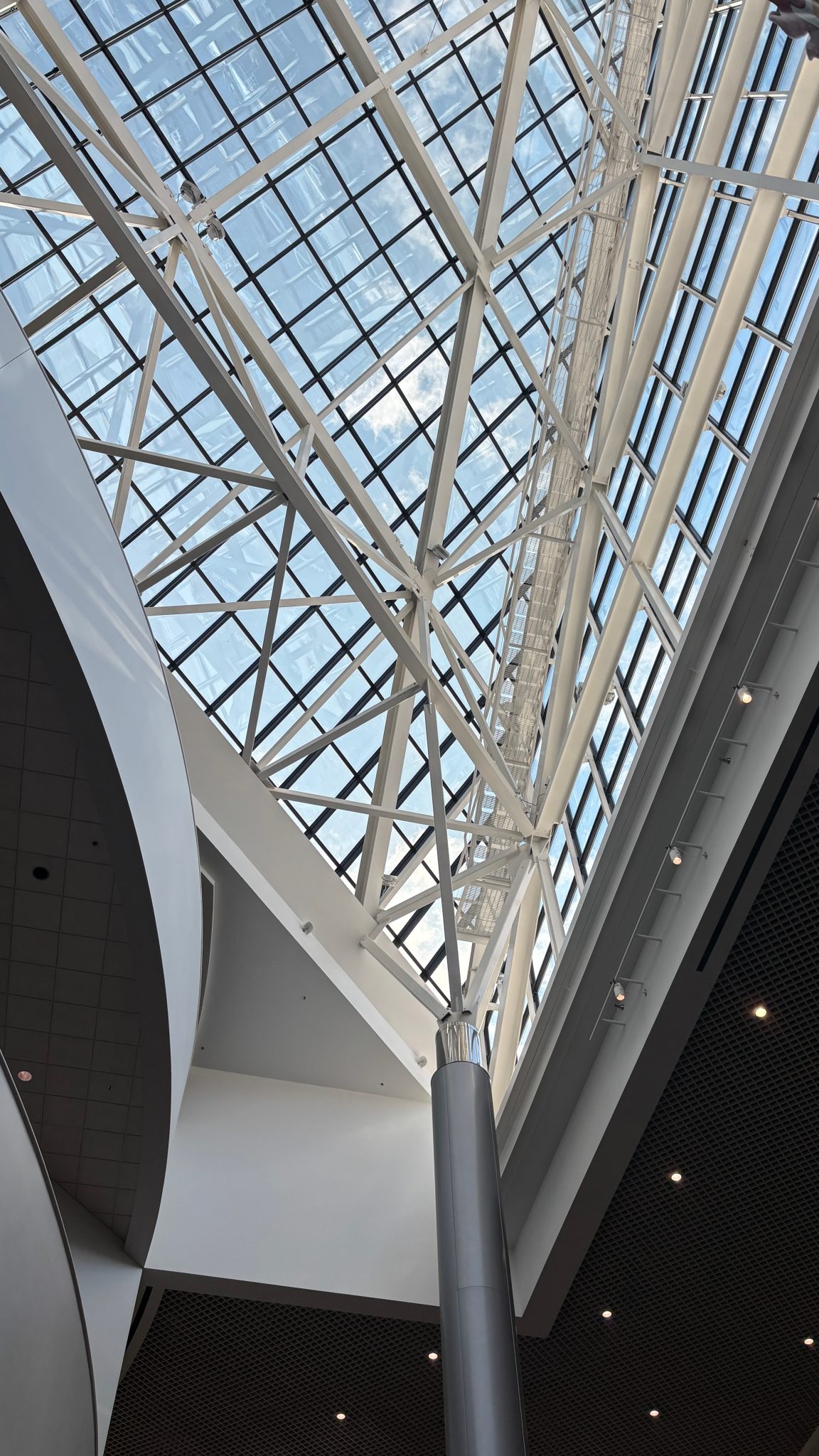
Commercial pricing varies more than domestic, because the variables are wider — the size and number of units, the roof type and covering, the access and edge-protection requirements, the glazing specification and whether the work happens in or out of trading hours. For that reason we always give a fixed written quote after a survey. As an indicative 2026 guide, supplied and installed:
- A single flat glass rooflight in an office or retail unit: from approximately £1,800–£4,000 depending on size and glazing.
- Replacement dome or polycarbonate rooflights on a warehouse or industrial unit: often a per-unit rate that falls as quantities rise, with economies across a larger run.
- Continuous rooflighting or barrel vaults over a large floor area: priced by the scheme, where survey is essential.
- AOV and smoke-vent rooflights: specified and priced individually given their controls and requirements.
These are guide figures only. Access, height, the state of the existing covering and out-of-hours working all move the number, which is exactly why we survey first. For more detail on what drives the figure, see our commercial rooflight cost page.
Across Cheltenham and Gloucestershire
We are Cheltenham specialists first, and the town’s mix of commercial property — period buildings adapted to modern use, contemporary office space, independent retail and a thriving hospitality scene — is the kind of work we know best. But we cover the wider county too, and commercial daylighting needs vary from town to town.
In Gloucester, the docks regeneration and the city’s commercial and light-industrial estates throw up everything from showroom glazing to warehouse rooflight replacement. Cirencester and the surrounding Cotswold towns bring sensitive, often historic commercial buildings where appearance is paramount. Tewkesbury mixes a historic, flood-aware town centre with modern business units off the motorway corridor. Stroud’s converted mills and creative commercial spaces suit characterful glazing that respects the architecture. Bishop’s Cleeve and the villages around Cheltenham host business parks and retail that lean modern and practical. And Winchcombe, like much of the rural Cotswolds, calls for a careful, conservation-minded approach to anything visible. Wherever you are in Gloucestershire, we tailor the rooflighting to the building and the setting. See the areas we cover for the full picture.
Why Aspect Skylights
We do one thing: skylights and rooflights, installed new and replaced in full, for homes and businesses across Cheltenham and Gloucestershire. That focus is the point. Commercial daylighting rewards specialists who understand flat-roof detailing, large-pane handling, access planning and the realities of working around an operating business — and that is precisely what we do every week.
You get a calm, methodical, properly-detailed installation; a fixed written quote after a free survey, so the price is the price; glazing matched to the building rather than sold from a catalogue; and our written guarantee on our workmanship. We will give you a straight recommendation about what your roof and your space actually need, not the biggest order we can write. To talk through a project, get a quote or look over our full range on the services overview.
From quote to daylight, with no surprises
Fixed quote
A clear, fixed written price — online or by phone.
Survey
A specialist confirms the right glazing spec. Flexible times.
Install
Clean, weather-tight fitting that protects your property.
Guarantee
We tidy up and back the work with a written guarantee.
Frequently asked questions
Do you install commercial skylights across Gloucestershire or just Cheltenham?
Both. Cheltenham is our home turf, but we install and fully replace commercial rooflights right across Gloucestershire — Gloucester, Cirencester, Tewkesbury, Stroud, Bishop’s Cleeve, Winchcombe and the surrounding Cotswold towns and villages. See our areas-we-cover page for the full picture.
Can you replace old warehouse or industrial rooflights?
Yes. Full replacement of tired, leaking or yellowed domes and rooflights is one of our most common commercial jobs. We strip out the failed units, fit modern efficient replacements and re-detail the weatherproofing into the existing covering, backed by our written guarantee on our workmanship.
Will the work disrupt our business?
We plan around it. For shops, offices and hospitality venues we agree a programme that works with your trading hours, arrange safe access and edge protection, and sequence the work to keep disruption to a minimum while staying weather-tight throughout.
What roof coverings can you detail rooflights into?
All the common commercial coverings — single-ply membrane, built-up felt, EPDM, GRP and metal deck. We build kerbs to the right height and lap, weld or bond the weatherproofing correctly for your particular covering, which is what keeps a flat-roof unit watertight.
How much does commercial skylight installation cost?
It varies widely with size, quantity, roof type, access and glazing. As an indicative 2026 guide, a single flat glass rooflight in an office or retail unit starts from roughly £1,800–£4,000, while warehouse dome replacements are usually a per-unit rate that improves with quantity. We always give a fixed written quote after a survey.
Do commercial rooflights need to meet Building Regulations?
Yes. Part L sets the energy-efficiency and U-value requirements, and overhead glazing must be specified to break safely under Part K. Where rooflights form part of a smoke-ventilation or fire strategy there are further specific requirements, which we design to as part of the scheme.
Can you fit rooflights on a listed or conservation-area commercial building?
Often, yes, but it needs care. Cheltenham’s conservation areas and the wider Cotswold conservation areas and listed buildings face real scrutiny on anything visible from the street. We always check your property’s status first and keep visible alterations sympathetic where that is the requirement.
Do you handle smoke ventilation and access rooflights?
Yes, as part of a wider scheme where the building requires them. Automatic opening vents form part of a smoke-ventilation strategy and access rooflights provide safe roof access; both are specialist units with specific controls and requirements that we specify and price individually.
Helpful reading on this
Costs, comparisons and answers to the questions we’re asked most.
Commercial Skylight Installation across Gloucestershire
Local commercial skylight installation pages for the towns we cover most.
Other skylight services
Ready to bring the daylight in?
Tell us about your project and we’ll send a clear, fixed written quote — no pressure, no surprises.
- Fixed written price before any work starts
- No pressure, no obligation, no sales calls
- Flexible survey times that suit you
- A reply within one working day