Do Skylights Need Planning Permission in Cheltenham?
A plain-English guide to when a skylight is covered by permitted development and when you may need planning permission.
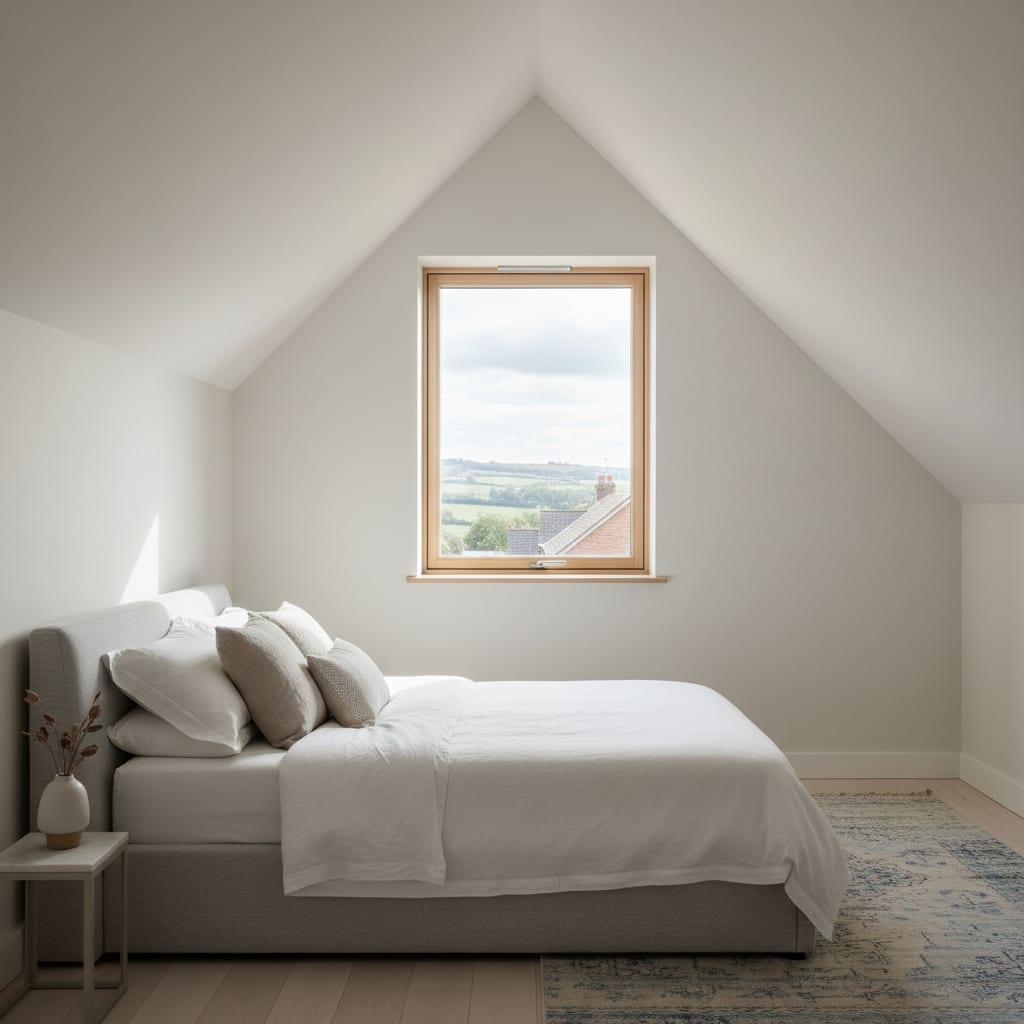
In most cases, fitting a skylight or rooflight to your home does not need planning permission, because the work usually falls under permitted development rights. There are important exceptions — conservation areas, listed buildings, flats and homes affected by an Article 4 direction — where you should always check before any work begins.
This guide explains the general position for England, where most of our customers in Cheltenham and across Gloucestershire are based. Rules can vary, and your local planning authority is the final word, so we always recommend confirming your own situation with them before committing.
The general rule: permitted development

Permitted development rights allow many home alterations to proceed without a formal planning application, provided the work stays within set limits. For rooflights and skylights, the key conditions are usually that:
- The rooflight does not project more than 150mm above the existing roof plane.
- No part of the rooflight sits higher than the highest part of the roof (the ridge).
- On a wall facing a highway, side-facing windows in a loft are obscure-glazed and, if openable, fixed shut below 1.7m.
Most flush-fitted roof windows and conservation-style rooflights are designed to meet these limits comfortably. We cover the detail in our guide to the 150mm rule and permitted development.
It helps to remember what permitted development is actually for. It is a national set of rights that lets householders make modest, low-impact changes without the cost and delay of a full application. The 150mm projection limit and the “no higher than the ridge” limit are both there to keep the change visually quiet — a rooflight that hugs the roof slope changes the look of the building far less than one that stands proud like a box. Because flush and conservation rooflights are engineered to sit low, they are the natural fit for permitted development, and they are also the design that local conservation officers in Cheltenham tend to prefer even where permitted development still technically applies. The two goals — staying within the rules and keeping the roof looking right — usually pull in the same direction.
It is also worth knowing that permitted development applies to the building as it stood on a fixed historical date, not as you would like it to be. If a previous owner already added rooflights or a dormer, or if an earlier extension used up some of the available allowances, your remaining rights can be reduced. On the older housing stock common around Cheltenham — where roofs may already have been altered more than once — this is worth bearing in mind before assuming a clean slate.
When planning permission is more likely needed
Conservation areas
If your property is in a conservation area, permitted development rights for rooflights on certain elevations may be restricted, particularly on roof slopes facing the road. You may need planning permission, and a sympathetic, low-profile rooflight is usually expected. See our page on skylights in a conservation area.
Listed buildings
Listed buildings are a special case. Almost any external (and often internal) alteration needs listed building consent, which is separate from planning permission. Cutting a new opening into a historic roof is rarely straightforward. Our rooflights in listed buildings guide explains the approach.
Flats and maisonettes
Permitted development rights generally do not apply to flats and maisonettes in the same way they do to houses. If you live in a flat, assume you may need permission and check with your local authority.
Article 4 directions
An Article 4 direction is a tool a council can use to remove specific permitted development rights in a defined area — often to protect the character of a street or neighbourhood. Where one applies, work that would normally be permitted may instead need a planning application. Read more in our Article 4 directions explained guide.
Designated land and the wider Cotswolds
A large share of the area we cover sits within the Cotswolds National Landscape (the area formerly known as the Cotswolds Area of Outstanding Natural Beauty). On this kind of designated land, permitted development rights are tighter than on an ordinary suburban house. Certain householder rights are reduced, and the council is keen to protect long views and the unbroken character of stone-roofed villages. It does not mean rooflights are banned — far from it — but it does mean a sympathetic, low-profile design and a discreet position carry even more weight. If your home is in a village such as Prestbury, Bishop’s Cleeve, Winchcombe or any of the Cotswold edge settlements, it is worth assuming the designated-land rules may apply and checking with your council.
Planning permission is not the same as building regulations
This is the point that trips most people up. Even when your skylight does not need planning permission, it almost always needs to meet building regulations — covering energy performance, safe glazing, structure and, in loft conversions, means of escape. These are two separate systems. A job can be permitted development yet still require building control sign-off. Energy performance is governed by Part L, safe and overhead glazing by Part K, and means of escape in a loft by Part B. We cover the full picture in our building regulations for skylights guide.
What this means for your project

For a typical pitched-roof house in Cheltenham, a flush rooflight or roof window is usually permitted development and does not need planning permission. The exceptions to watch are conservation areas, listed status, flats and Article 4 directions. The safe approach is simple:
- Confirm whether your home is listed or in a conservation area.
- Ask your local planning authority whether an Article 4 direction applies to your street.
- Plan for building regulations regardless of planning status.
How the rules apply across Gloucestershire’s councils
One thing that surprises homeowners locally is that “Cheltenham” covers more than one planning authority once you look at the wider area we serve. The town itself falls under Cheltenham Borough Council, but the surrounding villages and countryside are split between Cotswold District Council, Tewkesbury Borough Council and Stroud District Council. Each is the local planning authority for its own patch, and each maintains its own conservation area boundaries, Article 4 directions and local validation requirements. A rooflight that is unremarkable on a 1960s estate in Tewkesbury Borough can be treated very differently on a Cotswold-stone cottage a few miles away in the Cotswold District. The permitted development framework is national, but the way it is applied — and where rights have been withdrawn — is genuinely local, which is why we never give a blanket answer for “the Cheltenham area”.
Cheltenham is also unusual for the sheer extent of its Regency and Victorian townscape. Large parts of Montpellier, Lansdown, Pittville, the Park and the Central conservation area are protected, and many of those streets have terraced or villa roofs that are highly visible from the public realm. On those roofs the front (principal) slope is almost always the sensitive one, and a road-facing rooflight is the most likely trigger for needing permission. The good news is that the steeply pitched, slate-covered rear slopes common on these properties are frequently the perfect home for a discreet rooflight, and they tend to attract far less scrutiny.
How we help
Aspect Skylights installs and fully replaces rooflights to the required standards across Cheltenham, Gloucester, the Cotswolds and the surrounding villages, and we can guide you through what is likely to apply to your property and which council you fall under. We are not a planning or building control authority, and we do not claim to be approved or registered as one — but we know these rules well, we know how the local conservation teams tend to view rooflights, and we will point you in the right direction before you spend a penny. We back our fitting with a written guarantee on our workmanship. For sensitive roofs, see our conservation rooflight installation page, read our conservation area guide, browse all our services or get a quote after a free survey.
From quote to daylight, with no surprises
Fixed quote
A clear, fixed written price — online or by phone.
Survey
A specialist confirms the right glazing spec. Flexible times.
Install
Clean, weather-tight fitting that protects your property.
Guarantee
We tidy up and back the work with a written guarantee.
Frequently asked questions
Do I need planning permission for a skylight?
Usually no. Most rooflights on houses fall under permitted development, provided they do not project more than 150mm above the roof plane and sit no higher than the ridge. Conservation areas, listed buildings, flats and Article 4 directions are the main exceptions, so confirm with your local planning authority.
Does permitted development mean no rules at all?
No. Permitted development only covers the planning side. Your skylight will still normally need to meet building regulations for energy performance, safety glazing and structure, and may need building control sign-off.
Are flats treated differently?
Yes. Permitted development rights generally do not extend to flats and maisonettes in the way they do to houses. If you live in a flat, assume you may need planning permission and check with your council.
How do I find out if my home is in a conservation area?
Your local planning authority can confirm whether your property is in a conservation area, listed, or affected by an Article 4 direction. It is worth a quick check before any roof work begins.
Can Aspect Skylights handle the planning for me?
We can guide you on what is likely to apply and install to the required standards, but we are not a planning authority and do not claim to be approved or registered as one. For anything uncertain, your local authority is the final word.
Helpful reading on this
Costs, comparisons and answers to the questions we’re asked most.
Other skylight services
Ready to bring the daylight in?
Tell us about your project and we’ll send a clear, fixed written quote — no pressure, no surprises.
- Fixed written price before any work starts
- No pressure, no obligation, no sales calls
- Flexible survey times that suit you
- A reply within one working day