Rooflight U-Values Explained: What Is a Good U-Value?
A plain-English guide to rooflight U-values, what the number means, and what counts as good for a modern skylight.
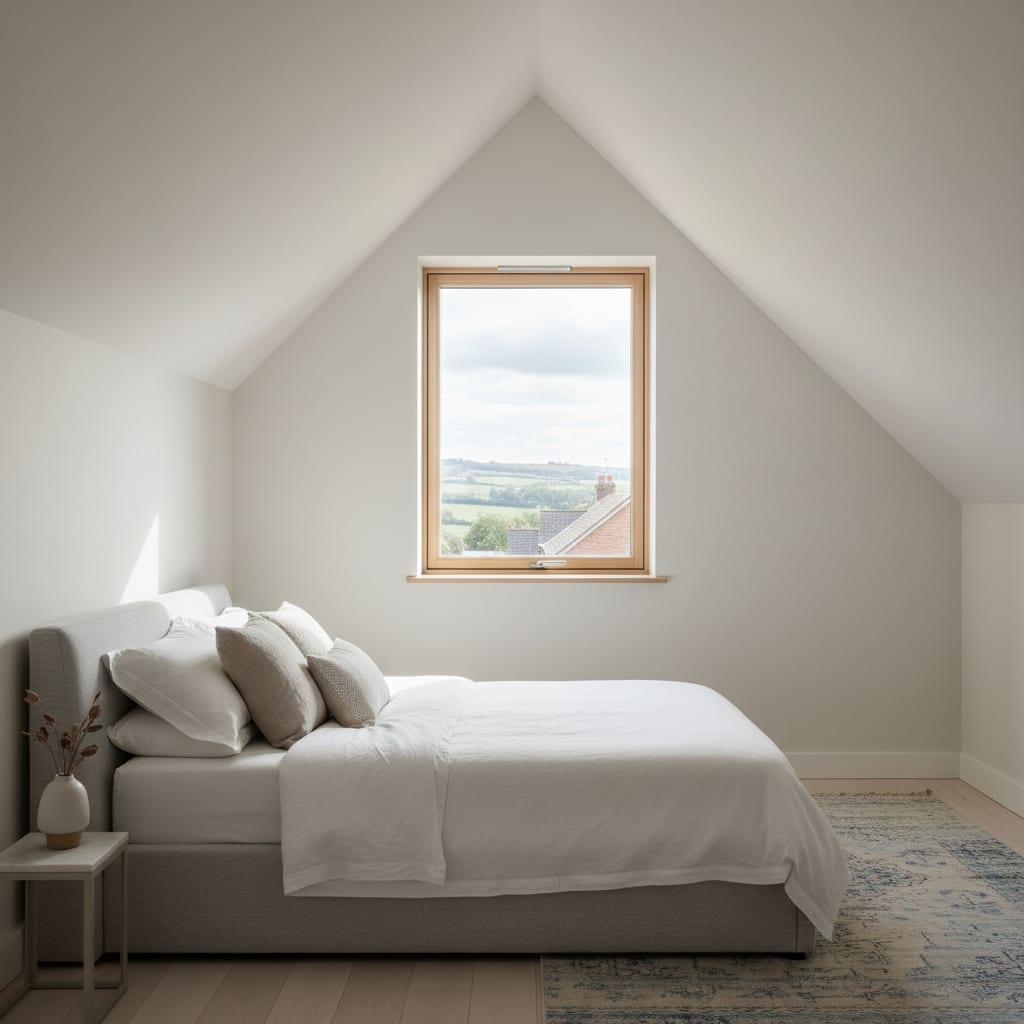
A rooflight U-value measures how much heat passes through the unit. The lower the number, the better the insulation. As a rough guide, a good modern rooflight sits around 1.0 to 1.4 W/m²K, with the best double and triple-glazed units lower still. The right figure for your project depends on the room, the glazing and how the value is measured.
U-value is one of the most useful numbers on a glazing specification, and one of the most misunderstood. This guide explains what it actually measures, what a sensible target looks like, and the small print to watch so you are comparing like with like.
What a U-value actually measures

A U-value tells you the rate at which heat is lost through a square metre of the rooflight for every degree of temperature difference between inside and outside. It is expressed in watts per square metre per kelvin, written as W/m²K. A lower number means less heat escapes, so the room stays warmer in winter for less energy.
It is the opposite idea to insulation values you may have seen quoted as R-values, where higher is better. With U-values, lower is always better. A unit at 1.0 W/m²K loses heat more slowly than one at 1.6.
What counts as a good rooflight U-value?
- Around 1.2–1.4 W/m²K: a solid standard for a quality double-glazed rooflight
- Around 1.0–1.2 W/m²K: very good, typical of premium double glazing with a warm-edge spacer
- Below 1.0 W/m²K: excellent, usually triple glazing or high-specification units
For most Cheltenham homes, a unit in the region of 1.2 W/m²K strikes a sensible balance of comfort and value. Building Regulations set a maximum allowable U-value for replacement rooflights, and a quality modern unit comfortably beats it. We confirm the specification that suits your room at survey.
Whole-unit vs centre-pane U-values
This is the detail that trips people up. A manufacturer may quote two different figures:
- Centre-pane U-value: measures the glass alone, away from the frame. It looks impressively low because the frame edge is excluded.
- Whole-unit U-value: measures the complete rooflight, glass and frame together. This is the realistic figure for how the rooflight performs in your roof.
Always compare whole-unit to whole-unit. A centre-pane figure of 1.0 might pair with a whole-unit figure nearer 1.4, and only the latter reflects real-world performance. If a quote shows a strikingly low number, it is worth checking which one it is.
What drives a rooflight U-value down
Number of panes
Triple glazing adds a third pane and a second insulating cavity, lowering the U-value compared with double glazing. Our triple-glazed rooflight installation page covers when that upgrade is worthwhile.
Gas fill and coatings
The cavity between panes is usually filled with argon, which insulates better than air. A low-emissivity coating on the glass reflects heat back into the room, lowering the U-value further without reducing daylight noticeably.
The spacer bar
The spacer that separates the panes runs around the edge of the unit. A warm-edge spacer reduces heat loss at the perimeter and helps cut condensation, improving the whole-unit figure.
Frame material
The frame influences the whole-unit value. A well-designed, thermally considered frame keeps the overall figure low.
How the cavity and gas fill work in more detail
The insulating heart of a sealed unit is the cavity between the panes, and its width matters. There is a sweet spot: too narrow and there is little insulating gas to slow heat through; too wide and the gas begins to circulate in a convection loop that actually carries heat across the gap. For argon-filled units the optimum cavity is usually around 14 to 16mm, which is why the best-performing units are not simply the thickest. In a triple-glazed unit the two cavities each contribute, but the overall build-up is deeper, which is one reason triple glazing is heavier and needs a frame and structure designed for the extra weight.
Argon is the standard gas fill because it is inexpensive, inert and noticeably less conductive than air. Krypton performs better still and allows a thinner cavity, which is why it sometimes appears in slim triple-glazed units where overall depth is constrained, but it costs considerably more. For the great majority of rooflights, an argon-filled double-glazed unit with a good low-emissivity coating gives the best balance of performance and value. The sealed unit also relies on its edge seal staying gas-tight over the years; a quality unit retains its fill far longer, which is part of what you pay for in a premium rooflight.
How low-emissivity coatings lower the figure

The single biggest improvement to a modern unit’s U-value comes from the low-emissivity, or low-E, coating. This is a microscopically thin layer of metal oxide applied to one of the internal glass surfaces facing the cavity. Ordinary warm surfaces radiate heat as long-wave infrared; the low-E coating reflects that radiated heat back into the room rather than letting it pass out through the glass. Because the coating is tuned to reflect infrared while passing visible light, it cuts heat loss substantially with only a small reduction in daylight.
It is worth knowing that there are broadly two families of coating. A high-solar-gain, or “soft”, low-E coating prioritises heat retention and lets more of the sun’s warmth through, which suits north-facing or shaded roofs where you want every scrap of free winter heat. A solar-control low-E coating is tuned to reject more of the sun’s heat, trading a little winter gain for far better summer comfort on sunny roofs. Both lower the U-value; they differ in how they treat solar gain, which is the g-value. This is why U-value and g-value should always be read together rather than in isolation.
Pitch, temperature difference and real-world figures
U-values are measured under standard laboratory conditions, which assume a particular orientation and a fixed temperature difference between inside and outside. A rooflight installed in a sloping or near-horizontal position can behave slightly differently to the same unit tested vertically, because the angle affects how the gas in the cavity convects. This is one more reason to treat the quoted figure as a fair comparison number rather than an exact prediction of in-use performance. The headline value is still the right tool for comparing one unit against another, provided you compare on the same basis.
It also helps to keep the number in perspective. A rooflight at 1.2 W/m²K is a vast improvement on the old single-glazed units it typically replaces, which could be three or four times that figure. The marginal gain from chasing the very lowest number on the market is real but smaller, and it should be weighed against cost, weight and whether the room genuinely needs it. We set out the realistic whole-unit figure for the specific unit we recommend so you can judge that trade-off clearly.
U-value is not the whole story
A low U-value is excellent for keeping warmth in, but on a sunny roof you also need to manage heat coming in. That is where the g-value, or solar factor, comes in, and the two are balanced together. A unit can have a brilliant U-value and still overheat a south-facing room if the solar control is wrong.
For the full picture of how skylights perform on heat loss and heat gain, see our energy-efficient skylight installation page. The best result usually comes from balancing the U-value against the solar factor for the way your room faces.
Choosing the right U-value for your room
- Large glazed areas: a lower U-value matters more where there is a lot of glass, such as a big lantern or run of rooflights.
- Year-round living spaces: a kitchen-diner or home office benefits from a lower figure for steady comfort.
- Occasional spaces: a landing or utility may not need the very lowest figure on the market.
Getting it right for your project
U-value is one factor among several, and the headline number only helps if it is the whole-unit figure measured fairly. We talk you through the glazing that suits each room, quote the realistic whole-unit value, and set it all out in a fixed written quote after a free survey. Every installation carries our written guarantee on our workmanship.
When you are ready, get a quote and we will recommend the right specification after a free survey, or read more on our services page.
From quote to daylight, with no surprises
Fixed quote
A clear, fixed written price — online or by phone.
Survey
A specialist confirms the right glazing spec. Flexible times.
Install
Clean, weather-tight fitting that protects your property.
Guarantee
We tidy up and back the work with a written guarantee.
Frequently asked questions
What is a good U-value for a rooflight?
As a rough guide, around 1.2 to 1.4 W/m²K is a solid standard for quality double glazing, 1.0 to 1.2 is very good, and below 1.0 is excellent, usually triple glazing. We confirm the figure that suits your room at survey.
Is a lower or higher U-value better?
Lower is better. A U-value measures how quickly heat is lost through the unit, so a lower number means better insulation and a warmer room for less energy.
What is the difference between centre-pane and whole-unit U-values?
Centre-pane measures the glass alone and looks lower because it excludes the frame. Whole-unit measures the complete rooflight, glass and frame together, and is the realistic figure. Always compare whole-unit to whole-unit.
Does a low U-value stop a room overheating?
Not on its own. A low U-value keeps warmth in, but overheating from sunlight is governed by the g-value, or solar factor. On sunny roofs the two are balanced together for the best result.
How do I choose the right U-value for my skylight?
It depends on the glazed area, how the room faces and how it is used. Book a free survey through our get-a-quote page and we will recommend the specification and set it out in a fixed written quote with our written guarantee on our workmanship.
Helpful reading on this
Costs, comparisons and answers to the questions we’re asked most.
Other skylight services
Ready to bring the daylight in?
Tell us about your project and we’ll send a clear, fixed written quote — no pressure, no surprises.
- Fixed written price before any work starts
- No pressure, no obligation, no sales calls
- Flexible survey times that suit you
- A reply within one working day