Part of our Plastic & Polycarbonate Skylight Installation service
Polycarbonate Skylight & Dome Cost in Cheltenham
Indicative 2026 UK guide prices for the budget end — polycarbonate skylights and domes.
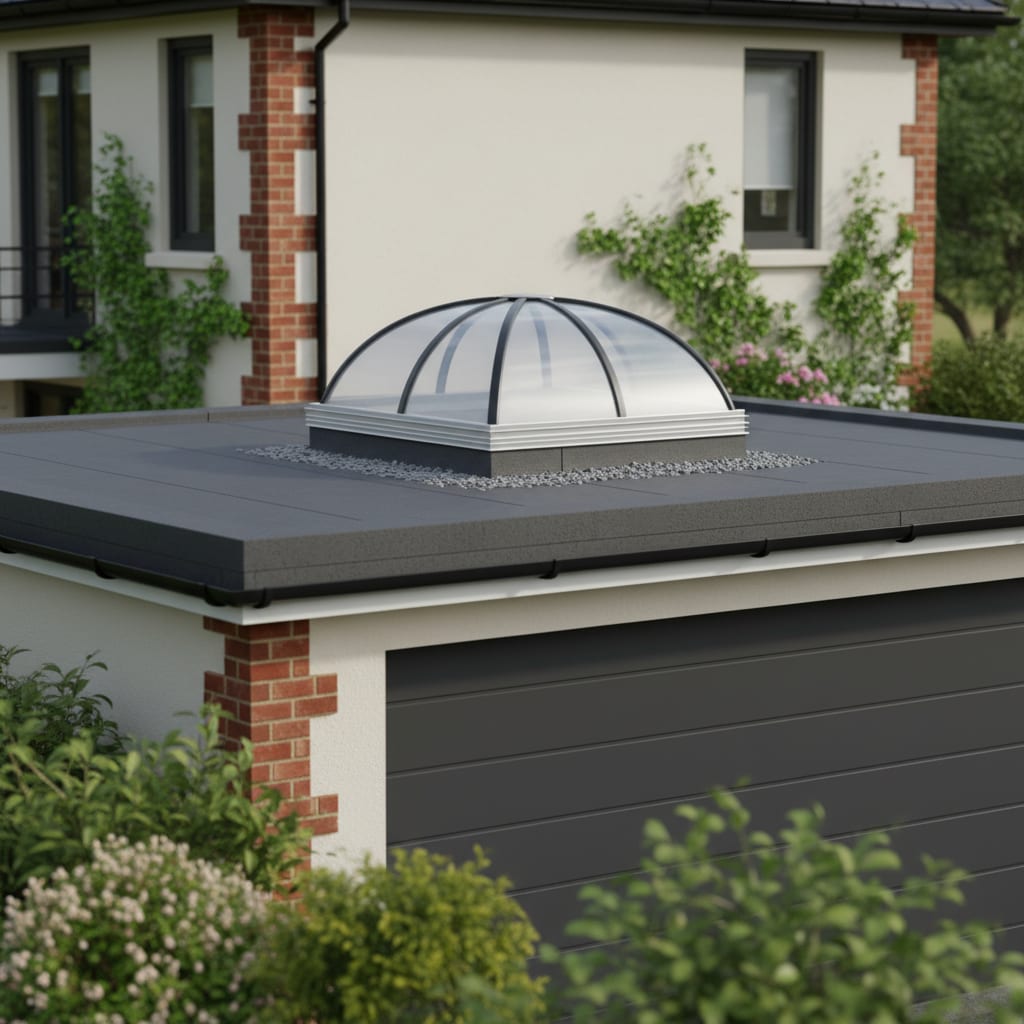
As an indicative 2026 UK guide, polycarbonate skylights and domes are the budget-friendly end of the market, typically £350 to £1,400 supplied and fitted for domestic units and from £600 per unit on commercial roofs. These are guide ranges only — the only accurate figure is a fixed written quote after a free survey.
Polycarbonate is the practical, lower-cost choice where you want daylight without the price of glass. It is light, tough and quick to fit, which makes it popular on flat-roof extensions, outbuildings, garages and commercial roofs. Here is what to budget and how it compares.
Indicative 2026 polycarbonate prices

- Small dome / rooflight (up to 0.9m x 0.9m): £350–£650 fitted
- Mid-size unit (1.2m x 1.2m): £650–£1,000 fitted
- Large or opening polycarbonate unit: £1,000–£1,400 fitted
- Commercial domes (per unit, multiple): from £600
Why polycarbonate costs less
Polycarbonate is far lighter than glass and quicker to handle, so units and fitting cost less. Multiwall polycarbonate also insulates reasonably well for the money. For garages, utility spaces, outbuildings and commercial roofs, it is often the sensible, value-led choice.
Polycarbonate versus glass — the trade-offs
Cost
Polycarbonate wins clearly on upfront price — typically a good deal less than an equivalent glazed unit.
Clarity and finish
Glass is clearer and more premium-looking. Polycarbonate is usually tinted or opal, giving diffused rather than crystal-clear light. For living spaces where you want a view of the sky, glass is generally worth the step up.
Durability
Polycarbonate is impact-resistant and hard to break, which suits exposed or commercial roofs. Over many years it can yellow or dull more than glass, though modern grades resist this well.
Insulation and noise
Multiwall polycarbonate insulates decently but is noisier in rain than glass. For a quiet living room, glass has the edge; for a workshop or store, polycarbonate is fine.
Worked example
A 1.2m x 1.2m opal polycarbonate dome on a flat garage roof might land indicatively around £750 fitted — roughly half what an equivalent glazed flat rooflight would cost. For a kitchen you actually relax in, most homeowners still prefer glass; for a garage or utility, polycarbonate makes good sense.
Where polycarbonate makes most sense
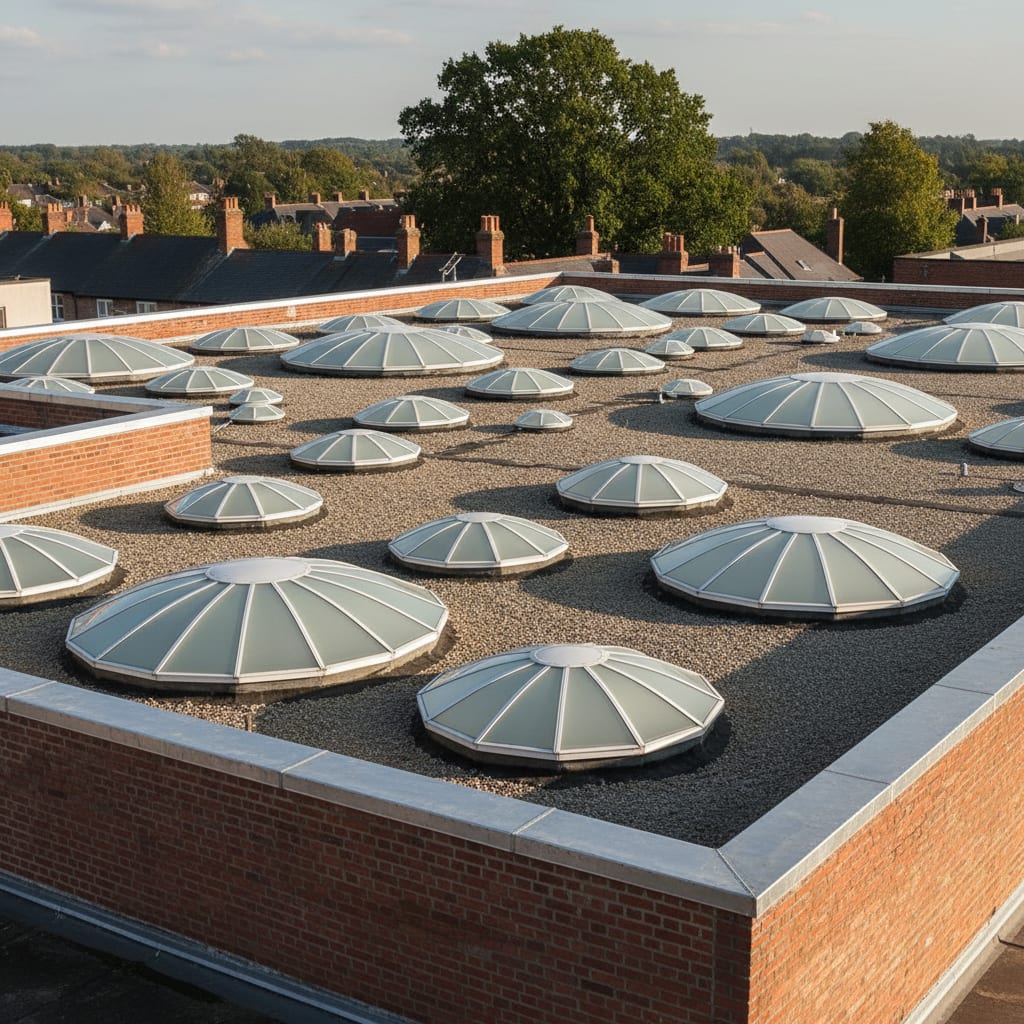
- Garages, outbuildings and utility rooms where budget matters more than clarity.
- Commercial and industrial roofs needing many units at sensible cost.
- Replacing existing domes like for like on a flat roof.
- Exposed locations where impact resistance is valued.
Where polycarbonate fits in around Gloucestershire
Polycarbonate is the workhorse of the daylight market, and across Cheltenham, Gloucester and the surrounding towns it tends to turn up in the same handful of practical situations. Knowing which of those you are in makes the budget decision easy.
Garages, outbuildings and utility spaces
Across the modern estates of Bishop’s Cleeve, Up Hatherley and Warden Hill, and the post-war housing of Gloucester, detached garages and flat-roof outbuildings are everywhere — and a polycarbonate dome or rooflight is the obvious, sensible way to bring daylight into a space where you want function, not a view of the sky. For a workshop, store or utility room, paying glass prices makes little sense, and polycarbonate does the job for a fraction of the cost.
Replacing aged domes
A great deal of our polycarbonate work in the area is like-for-like replacement of tired domes on 1980s and 1990s flat roofs — on extensions, garages and small commercial units alike. The original units yellow, craze and lose their daylight over twenty or thirty years of Gloucestershire weather, and swapping them for a modern UV-protected dome restores the light cheaply and quickly. On these jobs the existing kerb is often reusable, which keeps the cost right at the budget end.
Agricultural and rural buildings
Out toward the Cotswolds, around Stroud, Cirencester and the farming villages, polycarbonate is the standard choice for barns, stores and agricultural buildings, where toughness, light weight and low cost matter far more than crystal clarity. Its impact resistance is a genuine advantage on exposed rural roofs.
Conservation areas: where polycarbonate may not be the answer
One honest caveat for this area: in central Cheltenham’s conservation areas, the Cotswold stone villages, and on listed buildings around Cirencester, Winchcombe and Tewkesbury, a polycarbonate dome is rarely going to be acceptable on a visible roof. The appearance is simply too utilitarian for a heritage setting, and a conservation officer is likely to expect glass or a conservation-style rooflight instead. On a hidden rear garage or outbuilding, none of this applies — but on anything seen from a street in these locations, we would steer you toward glass and explain why. Building control oversight, where it applies, follows the usual pattern: Cheltenham Borough, Cotswold District, Tewkesbury Borough or Stroud District depending on where you sit.
Getting the most from a polycarbonate unit
Polycarbonate has improved a lot, and specifying it well makes a real difference to how long it stays good. Multiwall grades insulate better than single-skin, modern UV-protected sheets resist the yellowing that plagued older domes, and an opal finish softens the light pleasantly in a workshop or utility space. For a flat roof that takes the full force of a wet Cotswold winter, a quality unit properly flashed onto a sound kerb will serve for many years. As ever, the right choice is the one that matches the room: budget and toughness say polycarbonate; clarity and a living space you relax in say glass.
We will give you an honest comparison of polycarbonate against glass for your space, then a fixed written quote with our written guarantee on our workmanship. See our polycarbonate skylight installation page for the full service, our extension rooflight installation page if you are weighing up glass, and our commercial rooflight cost guide for multi-unit dome projects.
From quote to daylight, with no surprises
Fixed quote
A clear, fixed written price — online or by phone.
Survey
A specialist confirms the right glazing spec. Flexible times.
Install
Clean, weather-tight fitting that protects your property.
Guarantee
We tidy up and back the work with a written guarantee.
Frequently asked questions
Is polycarbonate cheaper than glass?
Yes, noticeably. Polycarbonate units and their fitting typically cost a good deal less than an equivalent glazed rooflight, which is why they suit budget-led and utility spaces.
Does polycarbonate yellow over time?
Older grades could dull or yellow over many years. Modern UV-protected polycarbonate resists this well, though glass still holds its clarity longer.
Is polycarbonate noisy in the rain?
It is a little louder than glass during heavy rain. For a workshop or garage that is rarely an issue; for a living room you relax in, glass is quieter.
Can polycarbonate be clear?
It is usually tinted or opal, giving diffused light rather than the crystal clarity of glass. If you want a clear sky view, we would steer you toward glass.
Is polycarbonate good for commercial roofs?
Yes — it is light, tough and cost-effective in quantity, which makes it a common choice for industrial and commercial roofs. See our commercial cost guide for project pricing.
Helpful reading on this
Costs, comparisons and answers to the questions we’re asked most.
Other skylight services
Ready to bring the daylight in?
Tell us about your project and we’ll send a clear, fixed written quote — no pressure, no surprises.
- Fixed written price before any work starts
- No pressure, no obligation, no sales calls
- Flexible survey times that suit you
- A reply within one working day