Part of our Energy Efficient Skylight Installation service
Solar Control vs Heat-Retention Glazing: Which to Choose
How solar control and heat-retention glazing differ, why you usually want both, and how to choose for the way your roof faces.

Solar control glazing keeps the sun’s heat out in summer, while heat-retention glazing keeps your warmth in during winter. They are not really rivals, because most modern skylights can do both at once. The real question is how much of each your room needs, which comes down to how the roof faces, how big the glazing is, and how you use the space.
It is easy to see these as an either-or choice. In practice a good skylight unit balances the two, and the decision is about emphasis rather than picking one and rejecting the other. Here is how to think it through.
What each type does
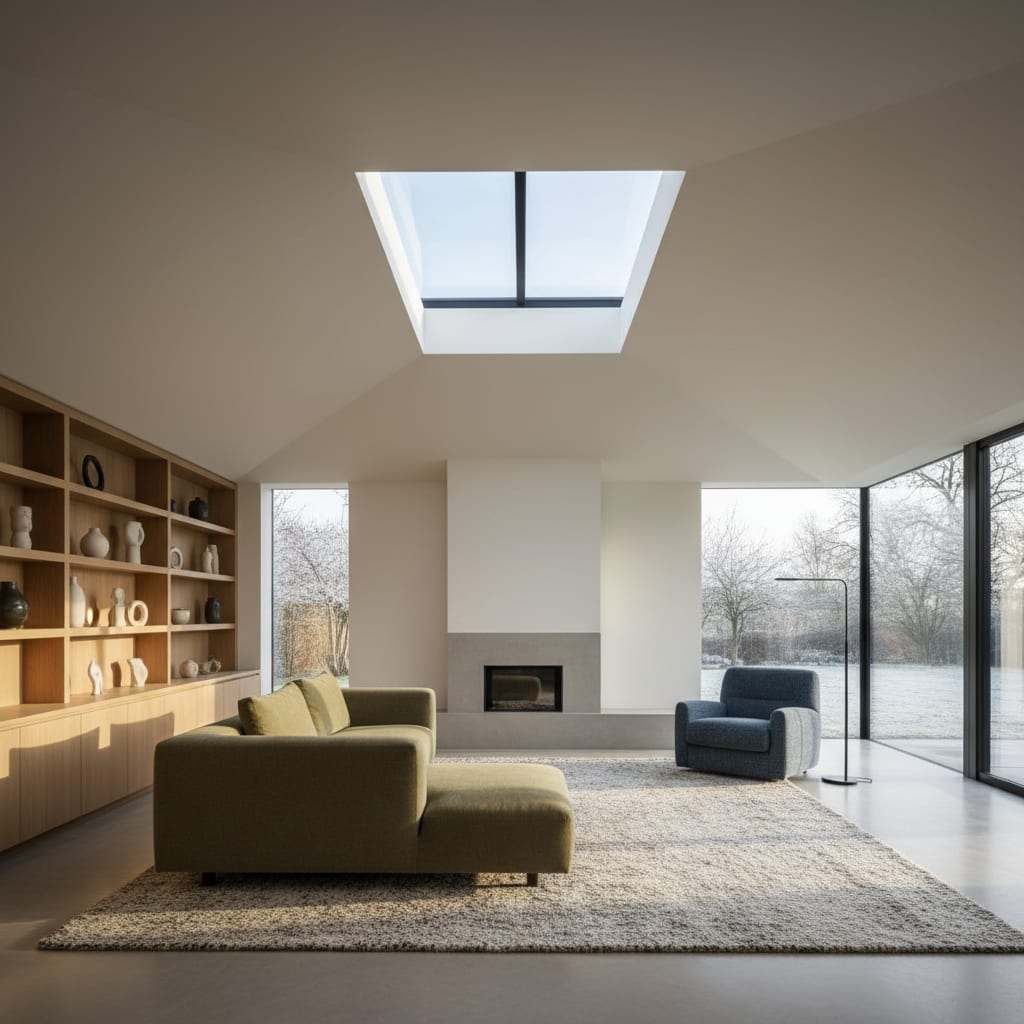
Heat-retention glazing
Heat-retention glazing is about insulation, measured by the U-value. A lower U-value means warmth escapes more slowly, keeping the room comfortable in winter and reducing wasted heat. It relies on argon-filled cavities, low-emissivity coatings and warm-edge spacers. Triple glazing takes this furthest. This is the priority where keeping warmth in is the main concern.
Solar control glazing
Solar control glazing is about keeping the sun’s heat out, measured by the g-value. A coating reflects much of the solar heat while keeping the room bright, lowering the g-value. It is the priority where summer overheating is the main concern, particularly on roofs that catch a lot of sun.
The coatings behind each effect
It helps to understand that both effects come from the same broad family of low-emissivity coatings, tuned differently. A heat-retention, or high-solar-gain, low-E coating is optimised to reflect indoor heat back into the room while still letting plenty of the sun’s warmth through, so it lowers the U-value and keeps the g-value relatively high. A solar control coating is tuned the other way: it still lowers the U-value, but it is engineered to reject a large share of the sun’s near-infrared heat, so it brings the g-value down as well. Because both are low-E coatings, choosing solar control does not mean giving up heat retention; you keep the good U-value and gain the lower g-value. The choice is really about how the coating handles solar gain, not whether you get insulation.
This is why the old mental model of “solar control versus heat retention” can mislead. In practice a single sealed unit carries one coating that does both jobs to some degree, and the specification question is which coating tuning suits your roof. On a sunny roof you want the solar control tuning; on a shaded north roof you want the high-solar-gain tuning that welcomes free winter warmth. Either way the unit insulates well.
Why you usually want both
Here is the key point: a single modern unit can combine a low U-value for winter warmth with a controlled g-value for summer comfort. You do not have to sacrifice one for the other. A solar-control double-glazed unit, for example, keeps a good U-value while bringing the g-value down, so the room is comfortable in both seasons.
So rather than choosing solar control or heat retention, the sensible approach is to specify a unit that delivers both, then weight it toward whichever your room needs more. Our energy-efficient skylight installation page explains how the two numbers work together.
How to choose the emphasis for your room
By orientation
- South or west-facing roof: emphasise solar control. These slopes catch sustained sun and overheating is the bigger risk.
- North-facing roof: emphasise heat retention. Little direct sun means overheating is rarely an issue, while a good U-value keeps the room warm.
- East-facing roof: a balanced unit suits well, with mild morning sun and good winter retention.
By glazed area
The larger the area of glass, the more both factors matter. A big lantern or run of rooflights amplifies both heat loss and heat gain, so a balanced, high-specification unit pays off most here. A small rooflight has less of either effect.
By room use
- Year-round living space: a kitchen-diner or home office justifies the best of both, for steady comfort through the seasons.
- Bedroom: heat retention for warmth, with solar control if the roof faces the sun, plus a blackout blind for sleep.
- Occasional space: a landing or utility may not need the top specification of either.
Worked scenarios

South-facing kitchen extension. A large lantern catching afternoon sun. The emphasis is solar control to prevent overheating, on a unit that still retains heat well for winter evenings. Solar-control double glazing is usually the sweet spot.
North-facing loft office. Soft, even daylight with little overheating risk. The emphasis is heat retention, so a low U-value, possibly triple glazing on a large area, keeps the room warm and comfortable year-round. Heavy solar control would only darken it for no benefit.
East-facing landing. Modest glazed area, gentle morning sun. A balanced standard unit serves well without needing the top specification of either.
Reading the two numbers together
When you compare quotes, the most useful habit is to look at the U-value and the g-value side by side rather than fixating on either alone, because they describe opposite flows of heat. A unit might boast a very low U-value but a high g-value, which would keep winter warmth in beautifully while letting a sunny room overheat in summer; another might have an aggressive low g-value that darkens a north room for no benefit. Neither figure is “good” in isolation. The right pairing is the one matched to your roof: a low U-value with a moderate g-value for a shaded room you want to keep warm, or a low U-value with a low g-value for a sunny room you want to keep cool. Where daylight matters, ask for the light transmittance too, so you can see that a low g-value has not come at the cost of a gloomy room.
Where triple glazing fits in
Triple glazing pushes heat retention furthest and can carry solar control too. It earns its place on large north-facing glazing, year-round living spaces and noisier locations, but it is not automatically right everywhere. On a sunny room where overheating is the main issue, solar-control double glazing often gives better value than jumping to triple. There is also a subtle point worth knowing: adding a third pane and a second coated surface tends to trim daylight a little and can lower the g-value as a side effect, so on a south-facing room triple glazing and heavy solar control together can leave the space darker than intended. Our triple-glazed rooflight installation page weighs this up, and our energy-efficient skylight installation page sets out the wider balance.
Getting the right balance for your project
The best specification balances solar control and heat retention for the way your roof faces, the size of the glazing and how you live in the room. We assess all of that at a free survey, recommend a unit that performs year-round, and set it out in a fixed written quote. Every installation carries our written guarantee on our workmanship.
To get the right glass specified for your room, get a quote for a free survey, or explore our services.
From quote to daylight, with no surprises
Fixed quote
A clear, fixed written price — online or by phone.
Survey
A specialist confirms the right glazing spec. Flexible times.
Install
Clean, weather-tight fitting that protects your property.
Guarantee
We tidy up and back the work with a written guarantee.
Frequently asked questions
What is the difference between solar control and heat-retention glazing?
Solar control glazing keeps the sun’s heat out in summer, measured by the g-value. Heat-retention glazing keeps your warmth in during winter, measured by the U-value. Most modern skylights combine both in one unit.
Do I have to choose between solar control and heat retention?
Usually not. A single modern unit can deliver a low U-value for winter warmth and a controlled g-value for summer comfort at the same time. The choice is about emphasis, weighted to what your room needs more.
Which glazing is best for a south-facing roof?
A south or west-facing roof catches sustained sun, so the emphasis should be solar control to prevent overheating, on a unit that still retains heat well for winter. Solar-control double glazing is often the sweet spot.
Which glazing is best for a north-facing roof?
A north-facing roof gets little direct sun, so overheating is rarely an issue. The emphasis should be heat retention, with a low U-value, possibly triple glazing on a large area, to keep the room warm.
How do I choose the right glazing for my skylight?
It depends on orientation, glazed area and room use. Book a free survey through our get-a-quote page and we will recommend a unit balanced for your room, set out in a fixed written quote with our written guarantee on our workmanship.
Helpful reading on this
Costs, comparisons and answers to the questions we’re asked most.
Other skylight services
Ready to bring the daylight in?
Tell us about your project and we’ll send a clear, fixed written quote — no pressure, no surprises.
- Fixed written price before any work starts
- No pressure, no obligation, no sales calls
- Flexible survey times that suit you
- A reply within one working day