Part of our Energy Efficient Skylight Installation service
Do Skylights Cause Heat Loss in Winter in Cheltenham?
Why old rooflights felt cold, and how modern insulated glazing keeps warmth in through a Gloucestershire winter.
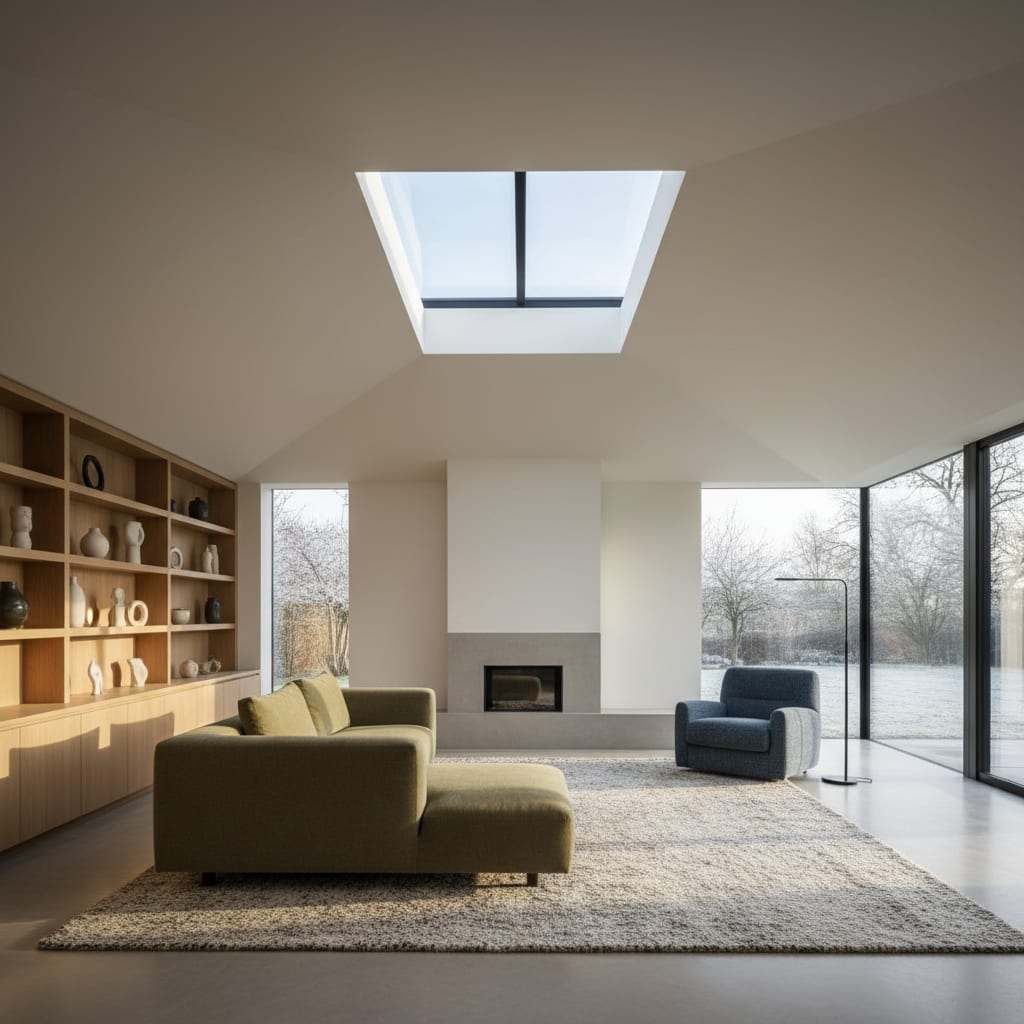
Modern, well-fitted skylights cause very little heat loss. Today’s double and triple-glazed rooflights are highly insulating and hold warmth well, a world away from the cold, single-glazed units people remember. Most winter heat loss comes from old glazing or poor fitting, both of which a proper installation or replacement resolves.
The idea that skylights are cold in winter is rooted in older technology. A draughty single-glazed rooflight genuinely lost heat. A modern insulated unit, fitted correctly, does not behave the same way. Here is what actually governs heat loss and how it is controlled.
Why old skylights felt cold

Single glazing
Older rooflights often had a single pane with no insulating cavity. Heat passed straight out, and the cold inner surface caused condensation and draughts. This is the source of the skylight’s cold reputation.
Poor or aged seals
Over decades, seals perish and flashing fails. A unit that once performed reasonably can develop draughts and let warmth escape around the edges as well as through the glass.
Gaps and inadequate insulation
If a rooflight was fitted without proper insulation around the opening, cold bridges form at the reveals. Good installation closes those gaps.
How modern glazing keeps warmth in
Insulating double and triple glazing
Modern rooflights use sealed double or triple glazing with low-emissivity coatings and insulating gas in the cavity. These achieve far better U-values, meaning much less heat escapes. Our energy-efficient skylight installation page explains the glazing in detail.
Warm-edge spacers and quality frames
Good units use warm-edge spacers and well-insulated frames to reduce heat loss at the edges, where older designs were weakest.
Proper installation around the opening
How a rooflight is fitted matters as much as the unit. Insulating the reveals, sealing correctly and getting the flashing right keeps the warmth in and the draughts out. This is core to how we install every skylight.
Should you upgrade an old rooflight?
If you have an older rooflight that feels cold, runs with condensation or draughts in winter, replacing it is usually a clear improvement in comfort and efficiency. The room feels warmer, the condensation eases and the heating works less hard. Our skylight replacement service swaps tired units for modern insulated ones.
Triple glazing: when it is worth it
For large glazed areas or rooms you want to keep cosy year-round, triple glazing adds another layer of insulation. For smaller rooflights, good double glazing is often enough. We help you choose the specification that suits each room rather than over-specifying everywhere.
The honest answer
A modern, properly installed skylight does not lose meaningful heat in winter. The cold-skylight reputation belongs to old single-glazed units and poor fitting. Choose insulated glazing, have it installed correctly, and a rooflight keeps a room bright in the day and warm through the evening.
To get the right glazing for a warm, efficient room, get a quote and we will advise and provide a fixed written price after a free survey, backed by our written guarantee on our workmanship.
From quote to daylight, with no surprises
Fixed quote
A clear, fixed written price — online or by phone.
Survey
A specialist confirms the right glazing spec. Flexible times.
Install
Clean, weather-tight fitting that protects your property.
Guarantee
We tidy up and back the work with a written guarantee.
Frequently asked questions
Do skylights lose heat in winter?
Modern double and triple-glazed rooflights lose very little heat. The cold reputation belongs to old single-glazed units and poor fitting. A well-specified, properly installed skylight holds warmth well in winter.
Are double-glazed skylights warm enough?
For most rooms, yes. Modern double glazing with low-emissivity coatings and insulating gas achieves good U-values. Triple glazing is worth considering for large glazed areas or rooms kept cosy year-round.
Why does my old skylight feel cold and drip?
It is most likely single-glazed or has perished seals, causing heat loss and condensation on the cold inner surface. Replacing it with a modern insulated unit usually resolves both the cold and the dripping.
Does installation affect heat loss from a skylight?
Yes, a great deal. Insulating the reveals, sealing correctly and getting the flashing right keeps warmth in and draughts out. Good fitting matters as much as the glazing for a warm, efficient rooflight.
Helpful reading on this
Costs, comparisons and answers to the questions we’re asked most.
Other skylight services
Ready to bring the daylight in?
Tell us about your project and we’ll send a clear, fixed written quote — no pressure, no surprises.
- Fixed written price before any work starts
- No pressure, no obligation, no sales calls
- Flexible survey times that suit you
- A reply within one working day