Part of our Energy Efficient Skylight Installation service
How to Stop Skylight Glare & Overheating in Cheltenham
Practical ways to keep a skylight bright but comfortable, from the right glazing to blinds, positioning and ventilation.
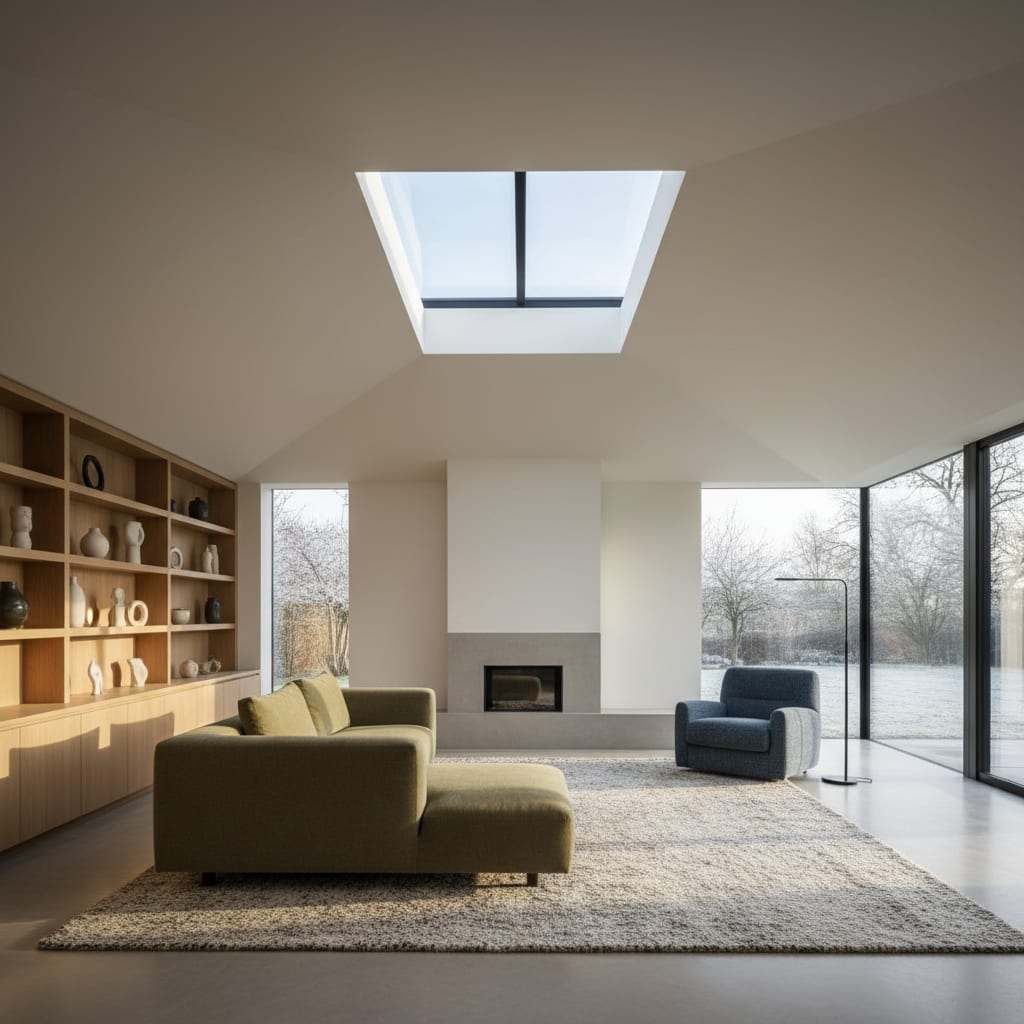
The most effective way to stop skylight glare and overheating is to start with the right glass. Solar control glazing cuts the sun’s heat and softens harsh light before it enters, and it works permanently. Blinds, sensible positioning and good ventilation then handle the rest. Get the combination right and a skylight stays beautifully bright without cooking the room.
A skylight that overheats or dazzles is almost always a specification or design issue, not a reason to avoid skylights. Roof glass faces the sky and catches sun for much of the day, so it needs handling differently to a vertical window. Here is how to get it comfortable.
Why Cheltenham and Cotswold homes are prone to this

We see this a great deal across Cheltenham and the surrounding Cotswold villages, and the reasons are local as much as technical. Many extensions here are built to make the most of long, open southerly aspects looking out over gardens or the Cotswold escarpment, which is lovely for the view but means the roof glazing catches sustained afternoon sun from the south and west. A glazed kitchen-diner in Charlton Kings, Prestbury or Leckhampton can be perfectly comfortable in the morning and uncomfortably hot by mid-afternoon in June, simply because the roof is taking the full force of a low, late sun.
The other local factor is the mix of building types. Plenty of Cheltenham’s Regency and Victorian homes have later rear extensions or loft conversions where roof glass was added to a deep-plan house to rescue a dark middle. Those rooms benefit enormously from the daylight, but the same glass that brightens them can overheat them if the specification was not chosen with the aspect in mind. Newer homes around Bishop’s Cleeve, Up Hatherley and the edge-of-town developments often have generous flat-roof rooflights over open-plan living space, where a large single pane facing the sun is the classic recipe for an afternoon greenhouse. In every case the fix is the same: design the heat out at the glass before reaching for blinds or fans.
Start with the glass: solar control glazing
The single biggest lever is the glazing itself. Solar control glass carries a coating that reflects a large part of the sun’s heat while letting daylight through. It lowers the g-value, the measure of solar heat gain, so less warmth enters the room in the first place.
- Cuts heat gain at the glass, before it reaches the room
- Reduces glare by softening harsh direct sun
- Always on, with nothing to remember or adjust
- Keeps the room bright, with only a modest drop in daylight
For a sunny roof this is the foundation. Everything else builds on it. Our energy-efficient skylight installation page explains how solar control balances against winter warmth.
Add blinds for control and blackout
Blinds give you on-demand control over light and privacy. They are not the main defence against heat, that is the glass, but they are excellent for:
- Blackout: bedrooms and media rooms benefit from a blackout blind
- Glare on screens: a home office can dim direct sun at certain hours
- Evening cosiness: closing a blind softens a large expanse of dark glass at night
Internal blinds are the common choice; external awnings or shades are the most effective at heat because they stop sun before it hits the glass, though they are less common on UK homes. Pairing solar control glass with an internal blind suits most rooms.
Get the positioning right
Where a skylight sits changes how much sun it catches. This is decided at design stage and is hard to change later, so it is worth thinking about up front.
Orientation
South and west-facing roof slopes catch the most sun and the most heat. North-facing slopes give soft, even daylight with little overheating. If you have a choice of slope, that choice matters.
Size and number
A larger glazed area, or several rooflights together, brings more light but also more potential heat. Right-sizing the glazing to the room avoids overdoing it.
Height and spread
Spreading daylight with a couple of well-placed rooflights can give a brighter, more even feel than one large pane in a hot spot.
Use ventilation to shed heat

An opening skylight lets hot air escape at the highest point of the room, which is exactly where heat collects. This stack effect can make a real difference on warm days, especially when paired with a lower window or door for air to enter.
- Opening rooflight: manual, electric or solar-powered venting
- Rain sensors: electric and solar units can close automatically if it rains
- Cross-flow: combine with a low opening for natural through-ventilation
See our VELUX window installation page for opening and solar-powered options.
Period homes vs modern builds: a local distinction
The right approach often differs between Cheltenham’s older housing and its newer estates, and it is worth thinking about which camp your home falls into. On a Regency or Victorian property, particularly in a conservation area around the town centre, Montpellier or Pittville, the priority is glazing that controls heat without an obvious heavy tint that would look wrong against period brick and slate. A neutral solar control coating does this well, and a conservation-style rooflight that sits low and flush keeps the roof line right while still carrying high-performance glass. Here the heat control is doing its work invisibly, which suits the building.
On a modern extension or new-build, where large flush rooflights and lanterns are the norm, the glazed areas tend to be bigger, so the heat-gain stakes are higher and a stronger solar control specification usually earns its place. These homes also lend themselves to electric opening rooflights and integrated blinds, which sit comfortably with a contemporary interior. The common thread across both is that the glass is chosen for the aspect first; the period or modern character of the house then guides the finish and the controls. We talk this through for your specific property at survey.
Putting it together for your room
The right answer depends on which way your roof faces, how big the glazing is, and how you use the room. Drawing on rooms we see across Cheltenham:
- South-facing kitchen-diner in Leckhampton or Charlton Kings: solar control glass as the foundation, an opening rooflight for ventilation, blinds optional
- Loft bedroom under a Prestbury roof: solar control glass plus a blackout blind for sleeping and early summer light
- North-facing studio or home office: standard glazing is often plenty, with a blind only if you need blackout
Get it specified right first time
Glare and overheating are far easier to design out than to fix afterwards. We assess your roof orientation, room use and glazed area at a free survey, recommend the glass, ventilation and blind options that suit, and set it out in a fixed written quote. Every installation carries our written guarantee on our workmanship.
To get the balance right for your room, get a quote for a free survey, or explore our services.
From quote to daylight, with no surprises
Fixed quote
A clear, fixed written price — online or by phone.
Survey
A specialist confirms the right glazing spec. Flexible times.
Install
Clean, weather-tight fitting that protects your property.
Guarantee
We tidy up and back the work with a written guarantee.
Frequently asked questions
How do I stop my skylight overheating?
Start with solar control glazing, which cuts the sun’s heat at the glass before it enters. Add an opening rooflight to vent hot air, and blinds for extra control. On sunny roofs the glass does the main work.
Do solar control skylights reduce glare?
Yes. The same coating that cuts heat gain also softens harsh direct sun, reducing glare while keeping the room bright. It works permanently, with nothing to adjust.
Are blinds enough to stop a skylight overheating?
Blinds help, but they block heat after it has entered the room and rely on you using them. On a sunny roof, solar control glass is the more effective primary defence, with blinds for blackout and privacy.
Does an opening skylight help with heat?
Yes. An opening rooflight lets hot air escape at the highest point of the room, where heat collects. Paired with a lower opening for air to enter, this natural ventilation makes a real difference on warm days.
Which way should a skylight face to avoid overheating?
North-facing roof slopes give soft, even daylight with little overheating, while south and west-facing slopes catch the most sun and heat. If you have a choice of slope, orientation matters. We advise at survey.
Helpful reading on this
Costs, comparisons and answers to the questions we’re asked most.
Other skylight services
Ready to bring the daylight in?
Tell us about your project and we’ll send a clear, fixed written quote — no pressure, no surprises.
- Fixed written price before any work starts
- No pressure, no obligation, no sales calls
- Flexible survey times that suit you
- A reply within one working day