Part of our Roof Lantern Installation service
Aluminium vs uPVC vs Timber Roof Lantern Cost in Cheltenham
Indicative 2026 UK guide prices comparing the three main roof lantern frame materials.

As an indicative 2026 UK guide, frame material is one of the biggest cost levers on a roof lantern. Broadly, uPVC lanterns start from around £1,800, aluminium from around £2,600, and timber (or aluminium-clad timber) from around £3,800, before fitting. These ranges are for guidance only — the only accurate figure is a fixed written quote after a free survey.
The material you choose changes the look, the sightlines, the upkeep and the price. Here is how the three compare so you can weigh value rather than just headline cost.
Indicative 2026 supply-and-fit ranges
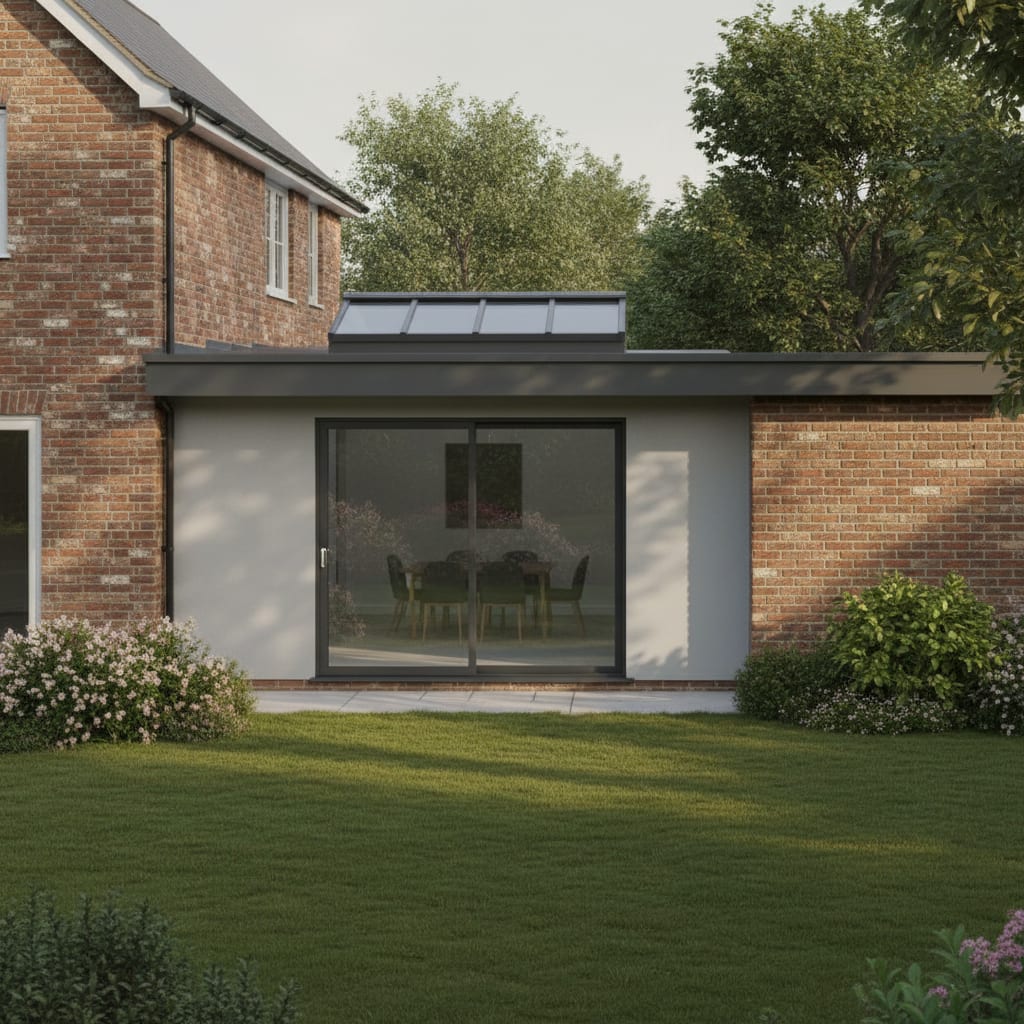
- uPVC: £1,800–£3,600 supplied and fitted
- Aluminium: £2,600–£6,000 supplied and fitted
- Timber / aluminium-clad timber: £3,800–£8,500 supplied and fitted
Size, glass spec and access all move these figures, so treat them as a starting point.
Aluminium
Aluminium is the most popular choice for contemporary homes and extensions. It is strong, so the frame bars can be slim, which means more glass and a cleaner look. It does not rot or warp, takes a powder-coated finish in almost any colour, and needs very little upkeep.
Best for: modern extensions, larger spans, anyone wanting maximum daylight and minimal maintenance. Cost note: mid-range to premium, but excellent value over its lifespan.
uPVC
uPVC is the budget-friendly option. It insulates well and costs less than aluminium or timber. The trade-off is chunkier frame profiles — the bars are thicker to carry the same load — so you get a little less glass and a slightly heavier look. Colour choice is also more limited.
Best for: tighter budgets, smaller lanterns, conservatory-style spaces. Cost note: the lowest entry point of the three.
Timber and aluminium-clad timber
Timber gives a warm, characterful frame that suits period and high-end homes. Aluminium-clad timber pairs a timber interior with a weatherproof aluminium exterior, giving the best of both: warmth inside, low maintenance outside. It is the premium option and priced accordingly.
Best for: heritage properties, design-led projects, buyers prioritising appearance. Cost note: the highest of the three, especially clad versions.
Cost versus value — how to choose

- Lowest upfront cost: uPVC.
- Best all-round value and sightlines: aluminium.
- Best appearance for premium homes: timber or clad timber.
- Lowest upkeep over time: aluminium and clad timber (uncladded timber needs periodic finishing).
A worked comparison
For the same 1.5m x 1.0m lantern on a sound kerb, you might see indicatively: uPVC around £2,600, aluminium around £3,600, and aluminium-clad timber around £5,200 — the steps reflecting profile slimness, finish options and material quality rather than fitting time, which is broadly similar.
Which material suits which Gloucestershire property
The right frame material is partly about budget and partly about the building it sits on, and Cheltenham’s housing stock is unusually varied for a town its size. Choosing well means matching the lantern to the property rather than just to a price bracket.
Period and Regency homes
Cheltenham’s Regency and Victorian housing — the elegant terraces and villas around Montpellier, Lansdown, Pittville and Tivoli — tends to reward a more considered frame. On a rear extension to a period home, aluminium-clad timber gives the warmth and proportion that suits older interiors while keeping the weatherproof, low-maintenance exterior these exposed roofs need. Timber and clad-timber frames also tend to sit more comfortably where a conservation officer may have a view, which matters across much of central Cheltenham, Winchcombe and the Cotswold villages. The same logic applies to the honey-coloured Cotswold stone cottages in places like Cirencester, Bourton and the villages around Stroud, where a chunky modern profile can look out of place.
Modern estates and new-build extensions
On the newer estates around Bishop’s Cleeve, Up Hatherley, Warden Hill and the growing developments toward Tewkesbury and Gloucester, aluminium is almost always the sensible choice. The architecture is clean and contemporary, the budgets tend to be more cost-conscious, and the slim aluminium sightlines give the bright, modern feel buyers in these areas want. For a standard rear kitchen extension on a modern home, aluminium delivers the best value-to-appearance balance of the three materials.
Budget-led projects
Where the priority is daylight at the lowest sensible cost — a utility space, a smaller extension, or a conservatory-style room being brought up to date — uPVC still earns its place. The chunkier bars are a fair trade for the saving, and on a smaller lantern the difference in sightline is less noticeable.
Local price and supply realities
Frame material affects the lead time as well as the headline cost, and that is worth factoring into a Gloucestershire project. Stock aluminium lanterns in common sizes are readily available, so a like-for-like job can move quickly. Aluminium-clad timber and any bespoke colour or size are made to order, which means a longer wait — something to plan around if you are coordinating with a builder on an extension in Cheltenham or the surrounding villages. Conservation-sensitive locations occasionally rule out certain finishes or favour timber, which can also shift both cost and timeline. We cover all of this at survey so the quote reflects the real-world job, not just a catalogue price.
Maintenance over the life of the lantern
Whole-life cost matters as much as the upfront figure, and the Cotswold climate — wet winters, real exposure on higher ground around Stroud and Winchcombe — tests a frame over time. Aluminium and aluminium-clad timber are effectively fit-and-forget on the outside: a powder-coated finish shrugs off the weather for decades. Uncladded timber is the exception; it needs periodic re-finishing to stay sound and good-looking, which is a genuine ongoing cost to weigh against its lower entry price relative to clad timber. Quality uPVC sits in between, lasting well with little more than an occasional clean. For an exposed roof in Gloucestershire, the lower-maintenance materials usually justify themselves over the years.
We install all three and will give you an honest steer for your property and budget at survey, then a fixed written quote with our written guarantee on our workmanship. Explore the options further on our roof lantern installation and custom skylight design pages, and if you are replacing an existing unit, see our cost to replace a roof lantern guide.
From quote to daylight, with no surprises
Fixed quote
A clear, fixed written price — online or by phone.
Survey
A specialist confirms the right glazing spec. Flexible times.
Install
Clean, weather-tight fitting that protects your property.
Guarantee
We tidy up and back the work with a written guarantee.
Frequently asked questions
Which roof lantern material lasts longest?
Aluminium and aluminium-clad timber tend to offer the longest service life with the least upkeep, as neither the visible exterior rots nor warps. Quality uPVC also lasts well; uncladded timber lasts a long time but needs periodic re-finishing.
Why is aluminium more expensive than uPVC?
Aluminium frames cost more to manufacture but are stronger, allowing slimmer bars and more glass. Many homeowners feel the better sightlines and lower maintenance justify the step up.
Is timber worth the extra cost?
On period or design-led homes, yes — the warmth and character can be worth it. On a standard modern extension, aluminium usually offers better value for a similar look.
Do all three materials insulate well?
Yes. With modern thermally broken aluminium, multi-chamber uPVC and timber all performing strongly, the glass specification usually has a bigger effect on energy performance than the frame material.
Can you match a colour to my windows?
Aluminium offers the widest colour range through powder coating. uPVC and timber have good but more limited options. We confirm available finishes at survey.
Helpful reading on this
Costs, comparisons and answers to the questions we’re asked most.
Other skylight services
Ready to bring the daylight in?
Tell us about your project and we’ll send a clear, fixed written quote — no pressure, no surprises.
- Fixed written price before any work starts
- No pressure, no obligation, no sales calls
- Flexible survey times that suit you
- A reply within one working day