Part of our Flat Roof Skylight Installation service
Pitched Roof Window vs Flat Roof Lantern (by Roof Type) in Cheltenham
Your roof often makes the decision for you. A clear guide to what suits a pitched roof, what suits a flat roof, and why.
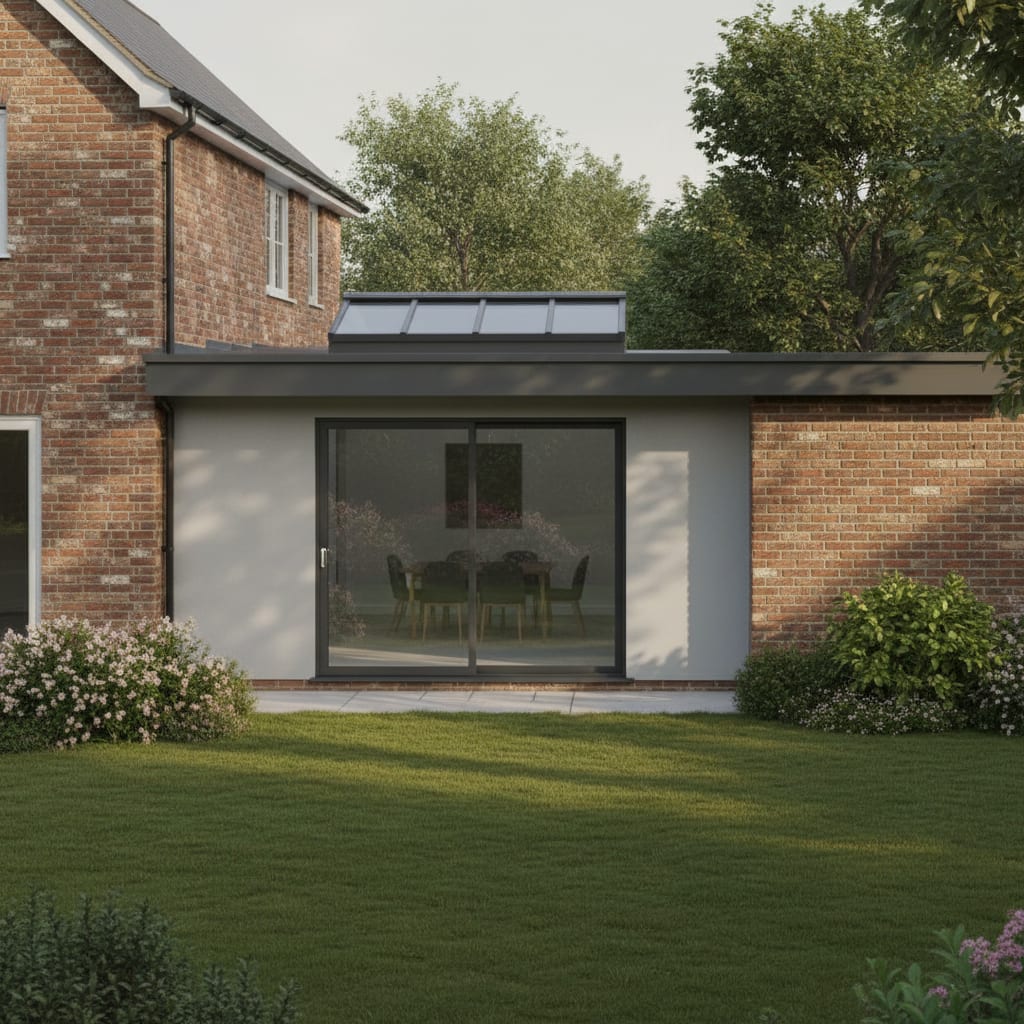
When people compare a pitched roof window with a flat roof lantern, they are often really asking a simpler question: what fits my roof? More than almost any other skylight decision, this one is driven by the roof you already have. A roof window is made to sit in a sloping roof; a lantern is made to rise from a flat one. Get the match right and everything else — light, weatherproofing, looks — follows naturally.
This guide walks through what suits each roof type and why, so you can see where your project lands before we even visit.
The quick answer

If you have a pitched roof — a loft, a sloping ceiling, a traditional roof slope — a roof window is the natural fit. If you have a flat roof — a typical single-storey extension — a lantern or flat rooflight is the natural fit. Your roof, not your taste alone, usually settles it.
Pitched roofs: roof windows
A pitched roof window sits in line with the slope, glazing the roof without altering its shape. It is the classic way to light a loft, a loft conversion or any room with a sloping ceiling.
- Best for: lofts, loft conversions, upstairs rooms with sloping ceilings, traditional pitched roofs.
- Light: daylight angled down into the room, often reaching deep into the space.
- Ventilation: opening versions (manual, electric or solar) make these excellent for releasing rising heat.
- Fitting: set between the rafters, weatherproofed with a flashing kit matched to your tile or slate; sheds water down the pitch.
For the detail, see our pitched roof skylight installation page, and for the well-known VELUX option our VELUX window installation page.
Flat roofs: lanterns and rooflights
A flat roof cannot take a sloping roof window, but it is the ideal home for a lantern or a flat rooflight, raised on a kerb to shed water and bring light into the room below.
- Best for: single-storey extensions, kitchen and dining extensions, flat-roof sections of a home.
- Light: a lantern catches light from several angles; a flat rooflight gives an even, uninterrupted wash of daylight.
- Character: a lantern adds height and becomes a centrepiece; flat glass keeps things sleek and modern.
- Fitting: mounted on a properly formed kerb or upstand, with weatherproofing detailed to your flat-roof covering.
For the detail, see our roof lantern installation and flat roof skylight installation pages.
What if my roof could take either?
Some roofs blur the line — a very low-pitch roof, for instance, or an extension where you could form either a flat or a shallow-pitched section. In those cases the decision opens up to looks and budget: a lantern for a statement, flat glass for minimalism, or roof windows for value and ventilation. This is exactly the kind of thing we assess on site, where we can see the structure and talk through the options.
Light and feel by roof type

Pitched roof windows angle daylight into the room and are brilliant for brightening lofts and sloping-ceilinged rooms. Flat-roof lanterns and rooflights pour light down from directly overhead, which suits open-plan extensions where you want an airy, sky-lit feel. Both can be specified with energy-efficient glazing to control heat and glare — see our energy-efficient skylight installation page.
Which should you choose?
Let your roof lead. Choose a pitched roof window for lofts and sloping ceilings; choose a flat roof lantern or rooflight for extensions and flat-roof spaces. Where the roof could go either way, choose on look, ventilation and budget. We will confirm what your structure suits at survey and steer you toward the right product.
How roof type plays out across Cheltenham
The housing stock around Cheltenham gives a clear picture of how roof type drives the choice. Across the older parts of town — the Victorian terraces and Regency villas of Montpellier, Lansdown, Tivoli and Pittville — pitched roofs dominate, which is why so many loft conversions in these areas are lit with roof windows set neatly into the slope. The same is true of the traditional pitched-roofed stone cottages in the surrounding Cotswold villages like Prestbury, Bishop’s Cleeve and Winchcombe, where a roof window in the slope keeps the roofline traditional and unobtrusive. By contrast, the single-storey rear extensions that homeowners add across the newer suburbs — Leckhampton, Up Hatherley, Benhall and Warden Hill — are very often built with flat roofs, which makes a lantern or flat rooflight the natural choice for bringing daylight into a new kitchen-diner.
Conservation considerations shade this further. In central Cheltenham’s conservation areas and across the Cotswolds Area of Outstanding Natural Beauty, a roof window sitting flush in a pitched slope — particularly a conservation-style unit — is often the more discreet way to light an upstairs room without disturbing a protected roofline. On a flat-roofed rear extension that is screened from the street, a lantern can usually rise more freely as a feature. Any formal planning or conservation guidance should come from your local authority, but the broad pattern is that the roof you already have, and how visible it is, will steer the product before personal taste even enters the picture.
A simple way to decide
Start with the structure. Is the roof in question pitched or flat? A pitched loft or sloping ceiling points firmly to a roof window; a flat extension roof points to a lantern or flat rooflight. Next, is the roof visible from the street or overlooked from higher ground? If so, a low-profile roof window in a slope, or a discreet flat rooflight, may sit more comfortably than a raised lantern. Then think about the job the light needs to do: angled daylight reaching deep into a loft, or light pouring straight down over an open-plan extension. Only where the roof could genuinely go either way — a very low-pitch section, say — does the decision open up to look, ventilation and budget.
Which suits a Cheltenham home?
For lofts, loft conversions and the pitched upstairs rooms of Cheltenham’s period and village homes, a roof window is the right and usually the more economical answer — see our pitched roof skylight installation and VELUX window installation pages. For the flat-roof extensions that so many local homes gain, a lantern or flat rooflight is the natural fit — see our roof lantern installation and flat roof skylight installation pages. Both can be specified with energy-efficient glazing to control heat and glare, covered on our energy-efficient skylight installation page.
Unsure which your roof needs? Get a quote and we will assess your roof and give you a fixed written price after a free survey, with our written guarantee on our workmanship.
From quote to daylight, with no surprises
Fixed quote
A clear, fixed written price — online or by phone.
Survey
A specialist confirms the right glazing spec. Flexible times.
Install
Clean, weather-tight fitting that protects your property.
Guarantee
We tidy up and back the work with a written guarantee.
Frequently asked questions
Does my roof type decide between a roof window and a lantern?
Largely, yes. A pitched roof, such as a loft or sloping ceiling, suits a roof window set into the slope. A flat roof, such as a single-storey extension, suits a lantern or flat rooflight on a kerb. We confirm what your structure takes at survey.
Can I fit a roof lantern on a pitched roof?
Roof lanterns are designed for flat roofs, raised on a kerb. On a pitched roof, a roof window set in line with the slope is the natural choice. We can advise the best option for your roof type during your survey.
What is best for lighting a loft?
A pitched roof window is the classic way to light a loft or loft conversion. It sits in the slope, angles daylight down into the room and, in an opening version, releases rising heat for ventilation.
My extension roof could be flat or low-pitched — what should I choose?
Where the roof could take either, the choice opens up to looks, ventilation and budget: a lantern for a statement, flat glass for a minimal finish, or roof windows for value. We assess the structure on site and talk through the options.
Which lets in more light by roof type?
Pitched roof windows angle daylight into the room and are great for lofts. Flat-roof lanterns and rooflights pour light from directly overhead, ideal for open-plan extensions. Both can use energy-efficient glazing to control heat and glare.
Helpful reading on this
Costs, comparisons and answers to the questions we’re asked most.
Other skylight services
Ready to bring the daylight in?
Tell us about your project and we’ll send a clear, fixed written quote — no pressure, no surprises.
- Fixed written price before any work starts
- No pressure, no obligation, no sales calls
- Flexible survey times that suit you
- A reply within one working day