Part of our Roof Lantern Installation service
What Size Roof Lantern Do I Need for My Room in Cheltenham?
How to size a roof lantern so it fills the room with light and looks right in proportion — with simple guides by room size and the factors that adjust them.

As a guide, a roof lantern usually looks and performs best when it covers roughly 15–25% of the room’s floor area and sits in proportion to the space below. A typical 20m² kitchen extension suits a lantern around 2m x 1.5m to 3m x 2m. Ceiling height, roof structure and the look you want then refine it. The accurate size comes from a free survey.
Get the size of a roof lantern right and it transforms a room, flooding it with light and lifting the ceiling. Get it wrong and it can look lost in a big space or overwhelming in a small one. Here is how to find the size that fits.
Roof lanterns on Cheltenham kitchen extensions
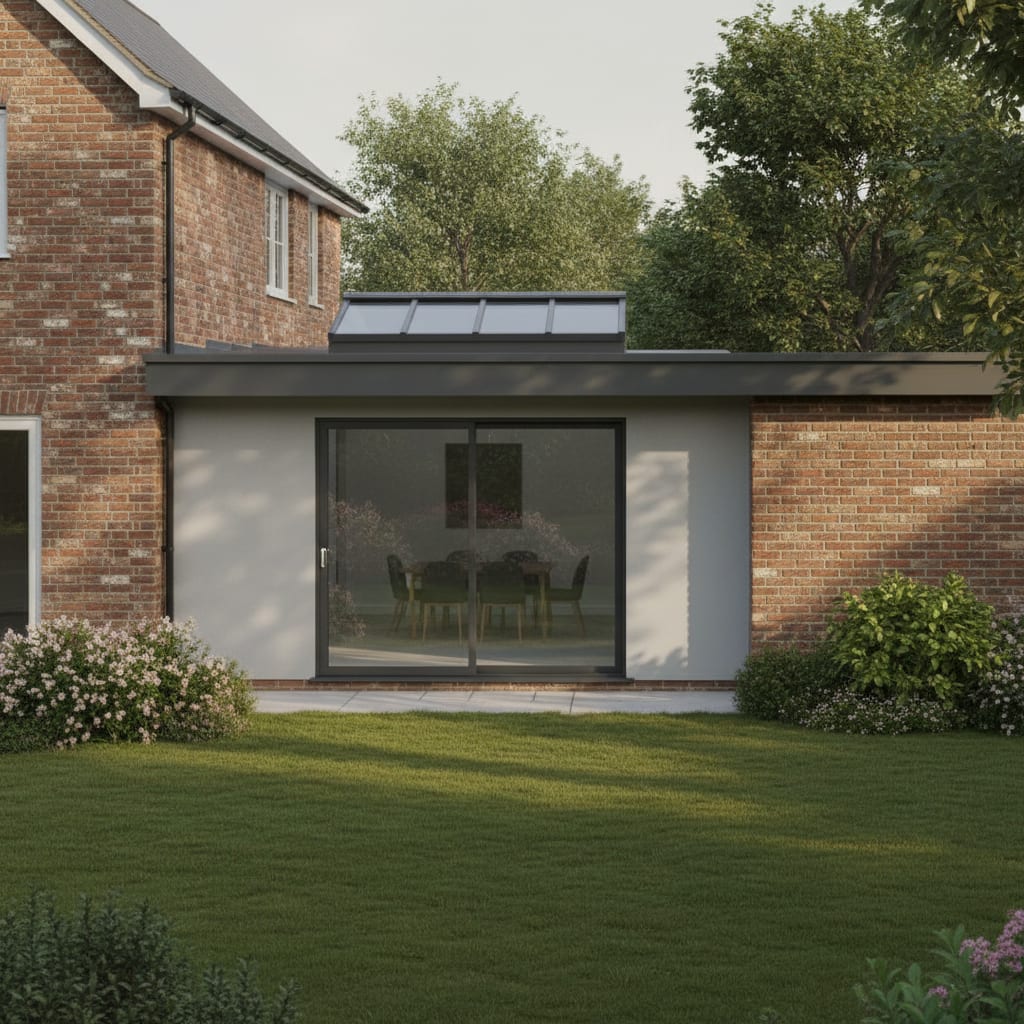
The roof lantern has become the signature feature of the modern Cheltenham kitchen extension, and for good reason. Across Charlton Kings, Prestbury, Leckhampton and the desirable streets around Pittville Park, the favourite project is a flat-roof rear extension opening the kitchen onto the garden, with a lantern as the centrepiece over the dining table or island. The reason it works so well here is partly the proportions of the typical extension — generous enough to carry a feature — and partly the local light. A lantern gathers daylight from several faces rather than one, which makes it especially effective on the many north-facing rear extensions of central Cheltenham, where every extra angle of sky helps lift a room that the soft Gloucestershire light would otherwise leave flat.
Out in the stone-built villages of the Cotswolds, where ceilings can be lower and rooflines more traditional, sizing becomes a careful balance. A lantern that looks confident on a tall new extension can overwhelm a more modest cottage roof, so we often recommend a slightly smaller lantern, or a flush flat rooflight instead, to keep the proportions right. The principle holds wherever you are: the lantern should feel like it belongs to the room and the roof, not perched on top as an afterthought.
Start with the room area
The simplest starting point is the floor area of the room. Aim for a lantern that glazes somewhere around 15–25% of that area — the lower end for a gentle lift, the upper end for a bright, airy, light-filled feel. From there, you scale the lantern to suit.
Guide sizes by room
- Small extension (up to 12m²): a lantern around 1m x 1m to 1.5m x 1m sits in proportion and brightens the space.
- Medium kitchen extension (15–22m²): around 2m x 1.5m to 3m x 2m gives a generous, central feature.
- Large open-plan room (25m²+): 3m x 2m or larger, or even two lanterns, to fill a bigger footprint with light.
These are guide proportions. The exact size depends on the roof structure and how the lantern relates to the room layout. Our roof lantern installation page covers the product detail.
Proportion matters as much as light
A lantern is a visual feature, so proportion counts. A good lantern usually sits centred over the main part of the room — the dining table or island, for instance — with a sensible margin of roof around it. Too small and it can look like an afterthought; too large and it can crowd the roof and complicate the structure. We always balance the light you want against how the lantern looks in the space.
What adjusts the size

Ceiling height
A tall, open ceiling carries a larger lantern beautifully and the raised glazing adds even more sense of height. A lower ceiling may suit a more modest lantern or, in some cases, a flush flat rooflight instead. See our flat-roof skylight installation page for that alternative.
Roof structure
The lantern sits on a kerb, and the opening has to work with the roof joists and the load. A larger aperture may need additional support, which we assess at survey. The structure can set a sensible upper limit on size.
Orientation
A large lantern on a south-facing roof gathers a lot of heat, so solar-control glazing keeps it comfortable. A north-facing room can take a generous lantern with clear glass for maximum soft light.
Room layout
Where the lantern sits over the room — centred, or shifted toward a kitchen or seating zone — affects both the light and the look, and can influence the ideal size.
One lantern or two?
For most rooms, a single well-sized lantern is the cleanest, most cost-effective choice. In a long or large open-plan space, two lanterns — or a lantern plus rooflights — can spread light more evenly and suit the proportions better than one enormous unit. We talk this through at survey.
What a roof lantern costs, roughly
As an indicative guide for 2026, a quality roof lantern supplied and installed typically sits somewhere in the region of £3,000 to £6,000 for the common kitchen-extension sizes, rising beyond that for the larger spans, premium glazing such as solar-control or triple glazing, or where a new insulated kerb needs forming. A south-facing Cotswold extension that wants solar-control glass, or a large open-plan space that warrants two lanterns, naturally sits higher. These are ballpark figures to help you plan rather than a quote — the size, glazing and roof all move the number, so the accurate price comes in your fixed written quote after a free survey.
Our honest recommendation
Size your lantern to around 15–25% of the room area, keep it in proportion to the space, and let ceiling height and roof structure set the practical limits. For a typical kitchen extension, something in the 2m x 1.5m to 3m x 2m range usually hits the sweet spot. A free survey is the only way to confirm the size that works for your room and roof, balancing light, looks and structure.
Get a quote and we will recommend the right lantern size and give you a fixed written quote after a free survey, backed by our written guarantee on our workmanship.
From quote to daylight, with no surprises
Fixed quote
A clear, fixed written price — online or by phone.
Survey
A specialist confirms the right glazing spec. Flexible times.
Install
Clean, weather-tight fitting that protects your property.
Guarantee
We tidy up and back the work with a written guarantee.
Frequently asked questions
What size roof lantern do I need?
As a guide, a lantern that glazes around 15 to 25% of the room floor area and sits in proportion to the space usually works best. A typical 20m² kitchen suits something around 2m x 1.5m to 3m x 2m. We confirm the size at a free survey.
How big should a roof lantern be for a kitchen extension?
For a medium kitchen extension of 15 to 22m², a lantern around 2m x 1.5m to 3m x 2m gives a generous central feature and plenty of light. The exact size depends on the room layout and roof structure.
Can a roof lantern be too big?
It can. An oversized lantern can crowd the roof, look out of proportion and complicate the structure. Balancing the light you want against how the lantern looks in the space is part of getting the size right.
Should I have one large lantern or two smaller ones?
For most rooms, a single well-sized lantern is cleanest and most cost-effective. In a long or large open-plan space, two lanterns can spread light more evenly and suit the proportions better. We advise at survey.
Does the roof structure limit the lantern size?
It can. The lantern sits on a kerb and the opening must work with the roof joists and load, so a larger aperture may need extra support. We assess the structure at survey, which sets a sensible upper limit on size.
Helpful reading on this
Costs, comparisons and answers to the questions we’re asked most.
Other skylight services
Ready to bring the daylight in?
Tell us about your project and we’ll send a clear, fixed written quote — no pressure, no surprises.
- Fixed written price before any work starts
- No pressure, no obligation, no sales calls
- Flexible survey times that suit you
- A reply within one working day