Part of our Energy Efficient Skylight Installation service
How Energy Efficient Are Skylights? (Heat Loss & Gain) in Cheltenham
A balanced look at skylight energy performance, covering heat loss in winter, heat gain in summer, and how modern glazing handles both.
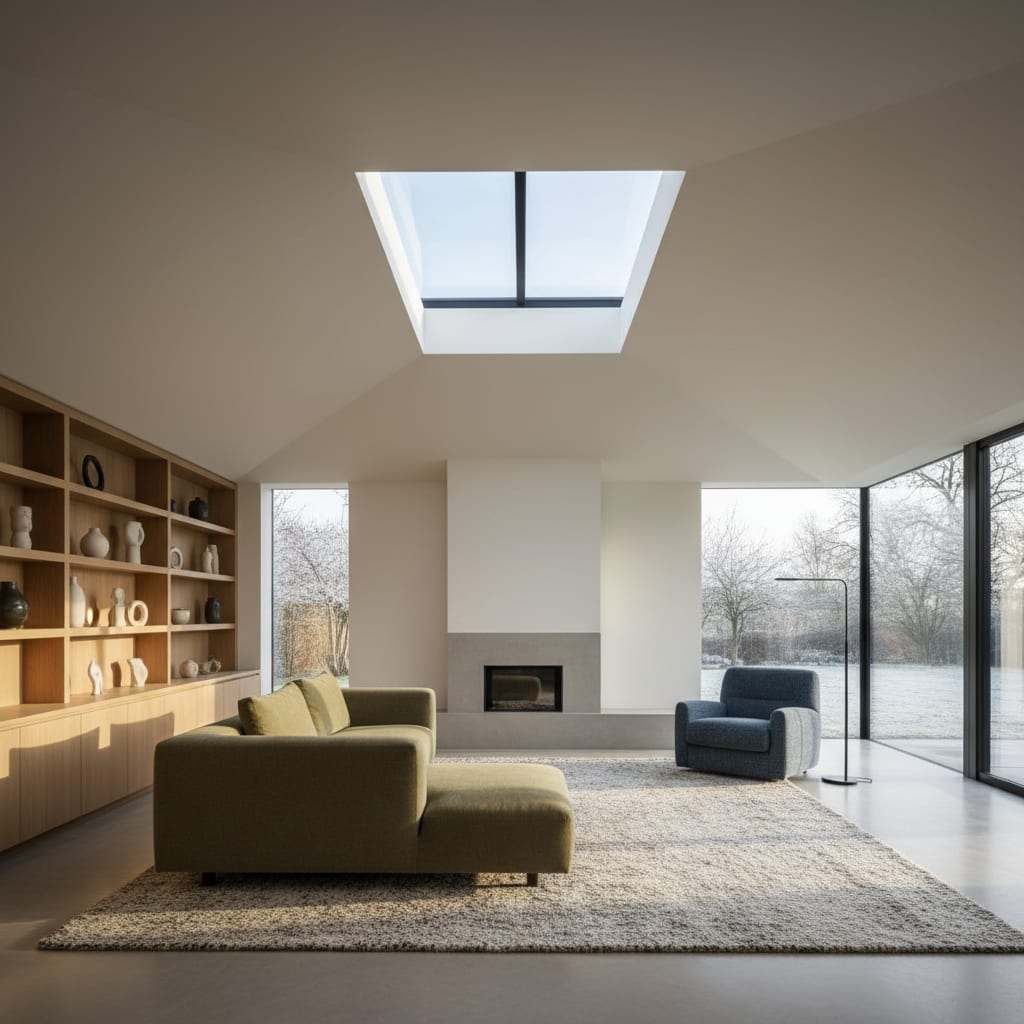
Modern skylights can be genuinely energy efficient when specified well. The two things to manage are heat loss in winter, governed by the U-value, and heat gain in summer, governed by the g-value. Good glazing handles both, and a skylight can even add free daylight that cuts the need for electric lighting. The key is matching the specification to your room.
Skylights sometimes get an unfair reputation as energy weak points, based on older, single-glazed units. Today’s glazing is a different proposition. This guide gives you the balanced picture of how skylights perform on energy, both the gains and the things to manage.
What this means for a Cheltenham home

Energy performance is partly about the glass and partly about the climate and building it sits in, and Cheltenham’s conditions shape the answer. The town and its surrounding Cotswold villages see a fairly typical temperate climate with cold, often damp winters and warm summers that, in a sheltered valley setting, can feel surprisingly hot in a south-facing room. That gives you a genuine two-season challenge: you want winter warmth retained and summer heat kept out of the same piece of glass, which is exactly what a well-specified modern unit is designed to do.
The building stock adds nuance. A solid-walled Regency or Victorian house in central Cheltenham, Montpellier or Pittville is typically harder to keep warm than a modern home, so heat retention from the rooflight matters more there, and the free daylight a rooflight brings to a deep period plan is especially valuable. A newer, well-insulated house around Bishop’s Cleeve, Up Hatherley or the Leckhampton fringe holds heat well already, so on those homes the bigger comfort question is often controlling summer gain through large modern rooflights rather than worrying about winter loss. The right balance, in other words, depends as much on your house as on the glass.
The two sides of skylight energy performance
Energy efficiency in a skylight comes down to two opposing flows of heat:
- Heat loss (winter): warmth escaping from the room through the glass and frame
- Heat gain (summer): the sun’s warmth entering the room through the glass
A well-specified skylight keeps winter heat in and summer heat out. Get one right and ignore the other, and the room will be uncomfortable in one season. The good news is that modern glazing lets you manage both at once.
Heat loss in winter: the U-value
The U-value measures how quickly heat escapes through the unit. A lower number means better insulation and less wasted warmth. Modern rooflights are far better here than the single-glazed units of the past.
- Older single glazing: high U-value, a real heat leak
- Quality double glazing: typically around 1.2–1.4 W/m²K, a strong standard
- Triple glazing: often below 1.0 W/m²K, excellent heat retention
Argon-filled cavities, low-emissivity coatings and warm-edge spacers all help bring the figure down. Our triple-glazed rooflight installation page covers when the upgrade to triple glazing pays off.
Heat gain in summer: the g-value
The g-value measures how much of the sun’s heat passes through the glass. On a roof, glass faces the sky and catches sun for hours, so managing heat gain matters more than it does for a wall window.
Solar control glazing carries a coating that reflects much of the sun’s heat while keeping the room bright, lowering the g-value. On a south or west-facing roof this is often the difference between a comfortable room and one that overheats. See our energy-efficient skylight installation page for the detail.
The hidden energy gain: free daylight

There is a positive side to the energy story that is easy to overlook. A skylight brings in abundant natural daylight, often far more than a wall window of the same size, which can reduce how much you rely on electric lighting during the day. In a previously dark room, that daylight is a genuine, ongoing saving as well as a comfort.
There is also useful passive solar gain in winter, when the sun’s warmth entering through the glass helps heat the room for free. The trick is welcoming that winter warmth while controlling the summer excess, which is exactly what balanced glazing achieves.
Balancing U-value and g-value
The art is in the balance. A unit with a brilliant U-value can still overheat a sunny room if its g-value is too high, and a heavily solar-controlled unit on a shaded north roof may simply make the room darker for no benefit. The right specification depends on:
- Orientation: south and west roofs need solar control; north roofs rarely do
- Glazed area: larger areas make both U-value and g-value more important
- Room use: a year-round living space justifies a higher specification than an occasional room
The hidden cost of poor fitting: thermal bridging and condensation
A point that rarely makes the brochures, but matters enormously to real-world efficiency, is what happens at the edge of the opening. If a rooflight is dropped into a roof without the insulation carried tightly up to the frame, a cold path called a thermal bridge forms around the perimeter. That bridge wastes heat regardless of how good the glass is, and worse, it creates a cold surface where warm, moist indoor air condenses. In a Cheltenham kitchen or bathroom, where steam is plentiful, a cold poorly insulated kerb is a classic cause of black mould and water marks appearing around an otherwise excellent rooflight.
This is why we treat the detailing around the opening as part of the energy specification, not an afterthought. Insulating the kerb or reveal, sealing the air and vapour barriers properly, and choosing a unit with a warm-edge spacer all work together to keep the perimeter warm and dry. On older Cotswold roofs with deep timber structures, getting this right takes care, and it is one of the clearest places where the quality of the installation, rather than the unit on paper, decides how the rooflight actually performs.
Other things that affect efficiency
Quality of installation
Even the best glazing leaks energy if it is poorly fitted. Proper weatherproofing, insulation around the opening and a well-sealed kerb or reveal are essential to the real-world performance, which is why fitting matters as much as the unit.
Opening for ventilation
An opening skylight lets hot air escape on warm days, reducing the need for cooling and improving comfort without energy use. See our VELUX window installation page.
Frame and spacer
A thermally considered frame and a warm-edge spacer reduce heat loss at the edges and help control condensation.
So, are skylights energy efficient?
Specified and fitted well, yes. A modern skylight with the right U-value and g-value keeps winter warmth in, controls summer heat, and brings free daylight that can cut your lighting use. The single most important step is matching the glazing to your room and fitting it properly.
We assess orientation, glazed area and room use at a free survey, recommend a specification that performs year-round, and set it out in a fixed written quote. Every installation carries our written guarantee on our workmanship.
To get an efficient skylight specified for your room, get a quote for a free survey, or read more on our energy-efficient skylight installation page.
From quote to daylight, with no surprises
Fixed quote
A clear, fixed written price — online or by phone.
Survey
A specialist confirms the right glazing spec. Flexible times.
Install
Clean, weather-tight fitting that protects your property.
Guarantee
We tidy up and back the work with a written guarantee.
Frequently asked questions
Are skylights energy efficient?
Modern skylights can be genuinely efficient when specified and fitted well. The right U-value keeps winter warmth in, the right g-value controls summer heat, and the free daylight can reduce electric lighting use.
Do skylights lose a lot of heat?
Older single-glazed units did. Quality modern double glazing, typically around 1.2 to 1.4 W/m²K, retains heat well, and triple glazing better still. Good fitting and insulation around the opening matter just as much.
Do skylights make a room too hot?
They can if the glazing is wrong for a sunny roof. Solar control glass, which lowers the g-value, cuts the sun’s heat while keeping the room bright, and an opening rooflight lets hot air escape. We advise at survey.
Can a skylight save energy?
Yes, in two ways. Abundant daylight can reduce daytime electric lighting, and winter sun entering the glass gives free passive warmth. Balanced glazing welcomes that winter gain while controlling summer excess.
What makes a skylight more energy efficient?
A low U-value for heat retention, an appropriate g-value for solar control, a thermally considered frame and warm-edge spacer, and proper weatherproofed installation. We match all of this to your room in a fixed written quote.
Helpful reading on this
Costs, comparisons and answers to the questions we’re asked most.
Other skylight services
Ready to bring the daylight in?
Tell us about your project and we’ll send a clear, fixed written quote — no pressure, no surprises.
- Fixed written price before any work starts
- No pressure, no obligation, no sales calls
- Flexible survey times that suit you
- A reply within one working day