Part of our Roof Lantern Installation service
Cost to Replace a Roof Lantern in Cheltenham
Indicative 2026 UK guide prices for replacing an existing roof lantern — like-for-like or upgrade.

As an indicative 2026 UK guide, replacing a roof lantern typically falls between £2,200 and £6,500, covering the new lantern, removal of the old unit, kerb checks and fitting. A like-for-like swap on a sound upstand sits at the lower end; a larger or upgraded lantern pushes toward the top. These are guide ranges only — the only accurate figure is a fixed written quote after a free survey.
If your existing roof lantern has misted up, started leaking around the bars, or simply looks dated next to the rest of your home, replacement is usually the sensible route. Below we set out realistic ranges, the factors that move the price, and a couple of worked examples so you know what to expect before you ask anyone to a survey.
Indicative 2026 replacement costs
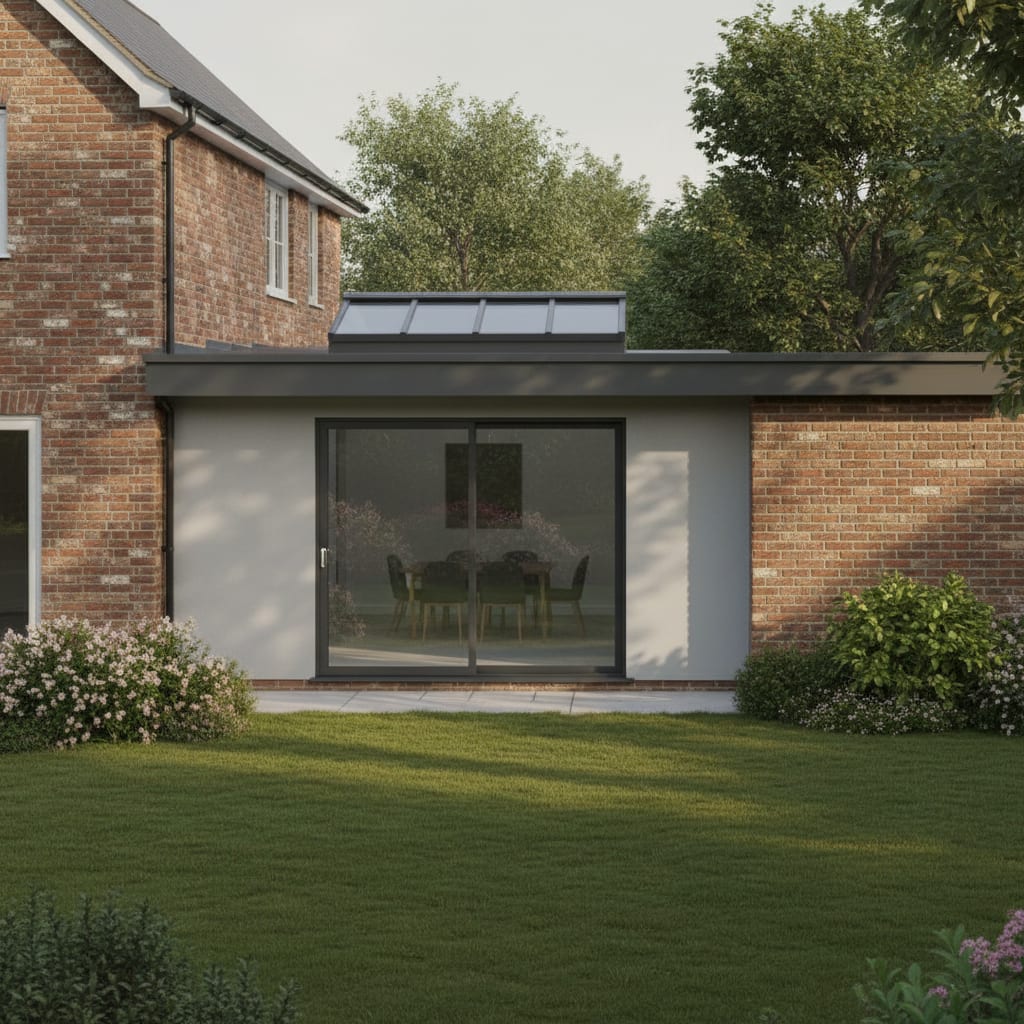
- Small like-for-like swap (up to 1.0m x 1.0m): £2,200–£3,200
- Mid-size replacement (1.5m x 1.0m): £3,200–£4,500
- Large or upgraded lantern (2.0m x 1.2m+): £4,500–£6,500
These figures assume the existing kerb (the upstand the lantern sits on) is in good order. If the kerb needs rebuilding or re-flashing, expect that to be itemised separately on your quote.
What affects the cost of a replacement
Like-for-like versus an upgrade
A straight swap — same size, same opening — is the most economical option because the structural work is already done. Many homeowners use the opportunity to upgrade: slimmer sightlines, better glass, or a larger footprint. An upgrade is rarely just the price of a bigger unit; it can also mean kerb alterations and more glazing to handle on site.
Condition of the existing kerb and flashing
The most common surprise on a replacement is the upstand underneath. If water has been getting in for a while, the timber kerb may have softened and need rebuilding. A sound kerb keeps costs predictable; a tired one adds to them.
Glass specification
Modern replacements usually come with thermally broken frames and good solar-control, self-cleaning glass as standard. Triple glazing, heavier solar coatings or acoustic glass all add to the unit cost but can be well worth it on a south-facing room.
Access
A single-storey extension lantern is straightforward. Anything at height, or over a conservatory or fragile roof, may need access equipment — see our scaffolding and access cost guide for how that is priced.
Worked examples
Example one — tired conservatory lantern, like-for-like. A 1.4m x 1.0m polycarbonate-era lantern replaced with a slim aluminium glazed unit on the existing kerb: indicatively around £3,400 all in.
Example two — dated unit upgraded and enlarged. An old 1.2m x 1.0m lantern removed, the opening widened to 1.8m x 1.1m and a contemporary lantern fitted with new flashings: indicatively around £5,800, reflecting the extra structural and glazing work.
Ways to keep the cost sensible

- Stay like-for-like where the existing size already works for the room.
- Book in good weather windows — settled conditions make for a cleaner, quicker fit.
- Replace before a leak spreads; fixing a soft kerb early is far cheaper than dealing with rot later.
- Combine works if you are already having other roof or extension work done and access is shared.
Replacement costs across Cheltenham and Gloucestershire
Local prices for a roof lantern replacement track the national ranges fairly closely, but a few Gloucestershire realities nudge them. The county has a high proportion of older extensions — many conservatories and orangeries added across Cheltenham, Bishop’s Cleeve and Hatherley in the 1990s and 2000s are now reaching the age where their first-generation lanterns mist up and leak. That is the single most common replacement we are asked to price in this area. On those properties the upstand is often a softwood kerb that has taken twenty years of weather, so it pays to budget for the possibility of a kerb rebuild rather than assuming a clean like-for-like swap.
In the older parts of central Cheltenham — the Regency terraces around Montpellier, Lansdown and Pittville — replacement is a different conversation. These streets sit within Cheltenham’s conservation areas, and on a roof that is visible from the street you may need to consider how a replacement looks from below as well as how it performs. A heritage-sympathetic frame colour and slim sightlines matter here in a way they do not on a hidden rear extension. We are happy to advise on what tends to sit comfortably on a Regency property versus a modern estate home in Up Hatherley or Warden Hill.
Which building control body has oversight depends on where you are. Most of urban Cheltenham falls under Cheltenham Borough Council, while homes out toward Winchcombe, Bishop’s Cleeve and the northern villages sit under Tewkesbury Borough Council, and the Cotswold villages to the south-east come under Cotswold District Council. A straight like-for-like lantern replacement on an existing sound opening is generally treated as repair and does not usually trigger a building control application, but enlarging the opening or altering the structure can. We flag anything relevant at survey so there are no surprises.
Conservation areas and listed buildings
If your home is listed or sits in a conservation area — common in central Cheltenham, Winchcombe and the Cotswold stone villages — a replacement that changes the external appearance can need consent even when the work itself is modest. A like-for-like swap of a hidden rear lantern is rarely an issue. A visible change to the roofscape is a different matter, and we would always rather raise it early than have you discover it later. None of this should put you off; it simply shapes the specification and, occasionally, the timeline.
Signs your lantern is due for replacement
Knowing when to act keeps costs down, because problems caught early stay small. The clearest signals are misting or condensation trapped between the panes (a sign the sealed unit has failed), staining or damp on the internal reveals, draughts around the bars, and visible movement or gaps in the flashing. On the older polycarbonate-era lanterns common across Gloucestershire extensions, yellowing and a tired, cloudy finish are often reason enough on their own — the daylight you bought the lantern for has quietly drained away over the years.
The reason early action matters financially is the kerb. Once water finds its way past a failing flashing, it works into the timber upstand, and a soft kerb is the difference between a one-day swap and a longer job with structural repair. If you have spotted any damp internally, it is worth getting a survey sooner rather than waiting for the next wet Cotswold winter to make it worse.
What the replacement process involves
A typical replacement runs in clear stages. We remove the old lantern carefully, inspect and, if needed, repair the kerb, fit and seal the new unit, renew the flashings, and finish the internal reveals. On a sound upstand in settled weather this is frequently a single day on site. We protect the room below throughout, because most replacements happen over a kitchen or living space that is still in use. Where the kerb needs rebuilding, or where the opening is being enlarged, allow an extra day and expect that work to be itemised separately so you can see exactly what you are paying for.
If you want a firm number rather than a range, the next step is a free survey. We measure, check the kerb, confirm the glass spec and give you a fixed written quote with our written guarantee on our workmanship. For full detail on the service itself, see our lantern roof replacement and roof lantern installation pages, and if the upstand turns out to need work at height, our scaffolding and access cost guide explains how that is priced.
From quote to daylight, with no surprises
Fixed quote
A clear, fixed written price — online or by phone.
Survey
A specialist confirms the right glazing spec. Flexible times.
Install
Clean, weather-tight fitting that protects your property.
Guarantee
We tidy up and back the work with a written guarantee.
Frequently asked questions
Is it cheaper to replace or repair a roof lantern?
We focus on full replacements and new installs rather than repairs. For a misted, leaking or dated lantern, a clean replacement on a sound kerb is often the most cost-effective long-term answer because you reset the glass, frame and flashings in one go.
Can I reuse the existing kerb?
Often yes, if the upstand is sound and the right size. Reusing a good kerb keeps the cost down. If the timber has softened from water ingress, we would rebuild it and itemise that on your quote.
How long does a replacement take?
A like-for-like swap is frequently a one-day job. Larger lanterns, kerb rebuilds or access setups can extend that to two or three days. We confirm timing at survey.
Will a new lantern be more energy efficient?
Almost always. Modern thermally broken frames and solar-control glass perform far better than older units, which can noticeably reduce heat loss in winter and glare in summer.
Do you give a guarantee?
Yes — we provide a written guarantee on our workmanship, and you receive the manufacturer’s product cover on the lantern itself.
Helpful reading on this
Costs, comparisons and answers to the questions we’re asked most.
Other skylight services
Ready to bring the daylight in?
Tell us about your project and we’ll send a clear, fixed written quote — no pressure, no surprises.
- Fixed written price before any work starts
- No pressure, no obligation, no sales calls
- Flexible survey times that suit you
- A reply within one working day