Part of our Flat Roof Skylight Installation service
Best Skylight for a Flat Roof Extension in Cheltenham
How to choose the right rooflight for a flat-roof extension — from a single fixed pane to a glazed lantern — and get the light and weatherproofing right first time.
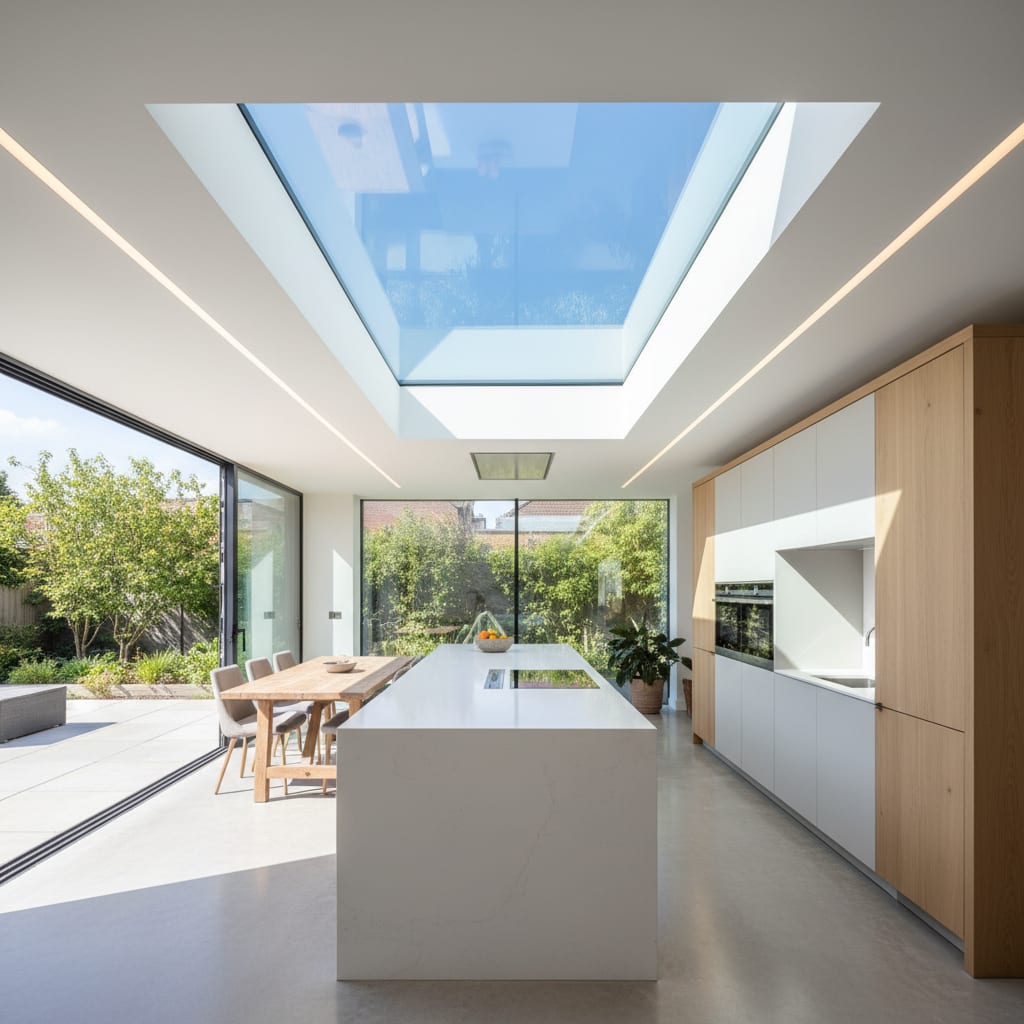
For most flat-roof extensions in Cheltenham and Gloucestershire, the best skylight is a fixed flat rooflight for clean modern light, or a roof lantern where you want a feature and a sense of height. The right choice depends on the room, the ceiling, and how much light you are after. The accurate answer for your extension comes from a free survey.
Flat-roof extensions are perfect candidates for overhead glazing because the roof is usually easy to reach and the structure is straightforward. The question is rarely whether you can have a skylight, but which type does the most for the space.
The main options for a flat roof extension

Fixed flat rooflight
A single pane of glass set into the flat roof on a raised kerb. It gives you crisp, contemporary light with minimal fuss and the slimmest sightlines. For a kitchen-diner or single-storey rear extension, one or two fixed rooflights often deliver everything you need. This is the most popular and most economical choice.
Roof lantern
A raised, multi-faceted glazed structure that lifts the roof line and draws the eye upward. A lantern brings drama and a generous wash of daylight, making it ideal for larger open-plan rooms where you want a centrepiece. See our roof lantern installation page for the detail.
Opening or electric rooflight
Where you want ventilation as well as light — a kitchen prone to cooking steam, for instance — an opening rooflight lets warm, moist air escape. Electric and solar versions add push-button or sensor control for panes that are out of reach.
Walk-on glass rooflight
If the extension roof doubles as a terrace or sits below a patio, a walk-on rooflight brings light to the room beneath while remaining safe to stand on.
How to choose between them
Match the product to the room size
A modest utility or boot room is well served by a single fixed rooflight. A large open-plan kitchen-diner can carry a lantern or several rooflights without the room feeling over-glazed.
Think about ceiling height and feel
A flat rooflight keeps a clean, low ceiling line. A lantern adds visual height and a more architectural feel. Neither is right or wrong — it depends on the look you want.
Consider the orientation
South-facing extensions gather a lot of heat through glass. Solar-control glazing tames that without dimming the light. North-facing rooms benefit from as much glazing as the structure sensibly allows.
Flat-roof extensions in Cheltenham and the Cotswolds
We see a particular pattern across Cheltenham and the surrounding Gloucestershire villages. A great many homes here — from the Regency terraces of Montpellier and Lansdown to the post-war semis of Benhall and Up Hatherley — have been extended at the rear with a flat-roof single-storey addition, usually to open up a kitchen onto the garden. The trouble is that a deep rear extension often pushes the new kitchen-diner well away from the only outside wall with windows, leaving the heart of the room dim even at midday. An overhead rooflight is what rescues that layout, because it draws daylight straight down into the middle of the floor plan where no wall window can reach.
Orientation in this part of the country is worth thinking about carefully. A south or west-facing rear extension in a sheltered Cotswold garden — common in Charlton Kings, Prestbury and the villages out towards Winchcombe — can gather a surprising amount of heat on a bright summer afternoon, so solar-control glazing usually earns its place there. North-facing extensions, which are the norm for the long rear gardens that run back from south-facing Cheltenham streets, never overheat but can feel flat and grey; here the priority flips entirely to maximising the soft, even daylight, and we lean towards larger panes or a lantern with high-transmission glass.
Getting the weatherproofing right

A flat-roof skylight sits on a raised kerb, or upstand, that lifts the glass above the roof surface so water drains away cleanly. The kerb, the flashing and the way the rooflight meets your roof covering — whether felt, EPDM, GRP or single-ply — are what keep it watertight for the long term. Good installation here is everything. A correctly detailed rooflight on a sound kerb should not leak, which is exactly why we focus on the upstand and weatherproofing rather than cutting corners.
This matters all the more given a Gloucestershire winter. The damp, drawn-out wet spells we get from late autumn through to early spring put any roof junction under sustained pressure — it is rarely one dramatic downpour that finds a weakness but weeks of persistent rain testing every seal. A kerb that sits too low, or flashing that has been rushed, will eventually let that moisture track in. We size and detail the upstand so standing water never gets the chance to pool against the glass, which is the single biggest reason a well-installed flat rooflight stays dry for decades while a cheap one fails within a few seasons.
If your builder is forming the extension now, getting the kerb sized accurately during the build saves work later and gives the cleanest finish. We are happy to liaise with your builder on the kerb dimensions before the roof covering goes on. Our flat-roof skylight installation page covers the kerb and weatherproofing in full, and if you are replacing tired old units on an existing extension, our skylight replacement service handles that end to end.
A note on glazing
- Solar-control glass reduces summer heat gain on sunny extensions while keeping the room bright.
- Self-cleaning glass helps on rooflights you cannot easily reach.
- Acoustic or triple glazing dampens the sound of heavy rain on a large glazed area.
What it costs, roughly
As an indicative guide for 2026, a single quality fixed flat rooflight supplied and installed on an existing accurate kerb typically falls somewhere in the region of £1,200 to £2,500 depending on size and glazing, while a roof lantern over a kitchen extension more commonly sits in the £3,000 to £6,000 range and upward for the larger spans. Opening, electric and walk-on options carry a premium, as does forming a new insulated upstand from scratch. These are ballpark figures to help you plan — every roof differs, so the only accurate number is the fixed written quote you get after a free survey. We never quote blind over the phone for exactly that reason.
Our honest recommendation
For a typical single-storey flat-roof extension, one or two well-placed fixed rooflights give the best balance of light, simplicity and value. Step up to a lantern when the room is large enough to carry it and you want a feature. Add opening or solar-control options where ventilation or heat are concerns. The best way to settle it is a free survey, where we assess the roof, structure and orientation and recommend what genuinely suits your space.
When you are ready, get a quote and we will give you a clear recommendation and a fixed written quote after a free survey, backed by our written guarantee on our workmanship.
From quote to daylight, with no surprises
Fixed quote
A clear, fixed written price — online or by phone.
Survey
A specialist confirms the right glazing spec. Flexible times.
Install
Clean, weather-tight fitting that protects your property.
Guarantee
We tidy up and back the work with a written guarantee.
Frequently asked questions
What is the best skylight for a flat roof extension?
For most extensions, a fixed flat rooflight gives the best balance of light, clean looks and value. A roof lantern suits larger open-plan rooms where you want a feature. The right choice depends on the room and orientation, which we assess at a free survey.
Can you put a skylight on any flat roof?
In most cases, yes. A flat-roof skylight sits on a raised kerb and needs a sound roof covering to flash into. We confirm the structure, kerb and weatherproofing approach at survey before quoting.
Will a flat roof skylight leak?
A correctly installed flat-roof rooflight on a properly formed kerb, with the flashing detailed to your roof covering, should not leak. Good installation is what prevents it, which is why we focus on the upstand and weatherproofing.
Should I choose a rooflight or a lantern for my extension?
A flat rooflight keeps a clean, low ceiling line and costs less. A lantern adds height and a feature centrepiece, suiting larger rooms. We talk through both at survey and recommend what fits your space.
Do I need an opening skylight for a kitchen extension?
Not always, but an opening rooflight helps clear cooking steam and warm air. Where the pane is out of reach, an electric or solar-powered opener gives you control. We can advise based on how you use the room.
Helpful reading on this
Costs, comparisons and answers to the questions we’re asked most.
Other skylight services
Ready to bring the daylight in?
Tell us about your project and we’ll send a clear, fixed written quote — no pressure, no surprises.
- Fixed written price before any work starts
- No pressure, no obligation, no sales calls
- Flexible survey times that suit you
- A reply within one working day